
Treated Eucalyptus Posts Prices in Kenya (2026 Guide) – Sizes, Durability, CCA Treatment & Fencing Costs

Updated: Mar 15

2.)CCA Treatment Explained – Why It Matters
3.)Treated Eucalyptus Posts Prices in Kenya (2026)
6.)Available Sizes & Customization Options
9.)How Many Treated Posts Do You Need Per Acre
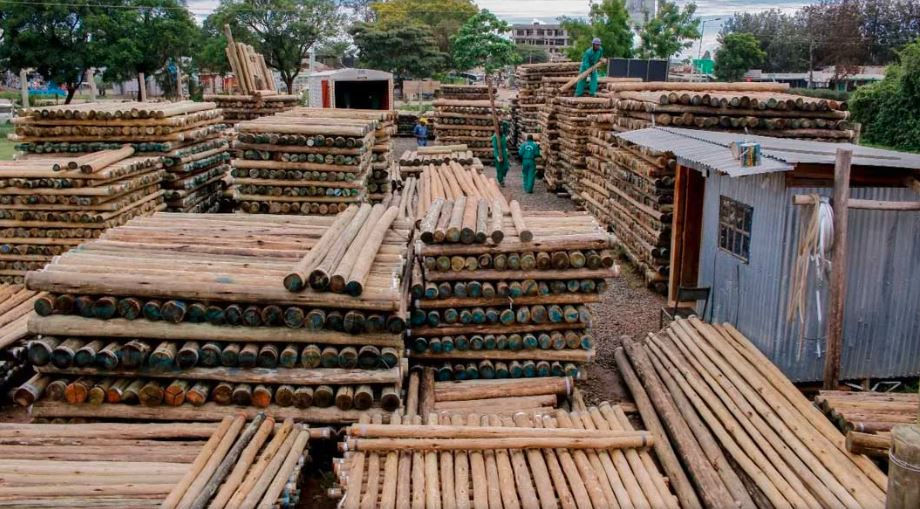
Treated eucalyptus posts are wooden fencing or structural poles made from fast-growing eucalyptus trees that have been pressure-treated with preservatives, commonly CCA (Chromated Copper Arsenate), to increase durability. The treatment process forces protective chemicals deep into the wood fibers, making the posts resistant to termites, fungal decay, moisture damage, and harsh weather conditions.
Want To Learn More About Tree Seed Price List Learn Here >>>
In Kenya, treated eucalyptus posts are widely used for boundary fencing, livestock enclosures, farm perimeters, and security installations. Compared to untreated posts, they last significantly longer—often 15 to 25 years—making them a cost-effective and reliable solution for long-term outdoor applications.
Without CCA treatment, eucalyptus posts would deteriorate much faster when exposed to ground contact and harsh outdoor conditions.

CCA (Chromated Copper Arsenate) treatment is a wood preservation process where protective chemicals are pressure-forced deep into eucalyptus timber to protect it from biological and environmental damage. The copper acts as a fungicide, preventing rot and decay, while arsenate protects against termite and insect attacks.
Not Sure How Many Posts You Need?
Tell us your land size and fencing type — we’ll calculate the exact number of posts and estimated budget for you.
Chromium helps bind the chemicals permanently into the wood fibers, reducing leaching and increasing durability. This process significantly extends the lifespan of fencing posts, especially in moist or termite-prone soils common in many parts of Kenya.
Prices are current based on the latest WoodChem Traders Ltd price list (checked 2026).

Want To Learn More About Kenya Forest Data Learn Here >>>
Post Size (Length × Diameter) | Unit Price (KES) |
7ft × 2–3″ | 410 |
7ft × 3–4″ | 525 |
8ft × 2–3″ | 550 |
8ft × 3–4″ | 670 |
8ft × 4–5″ | 780 |
9ft × 3–4″ | 790 |
9ft × 4–5″ | 915 |
9ft × 5–6″ | 1,020 |
10ft × 3–4″ | 930 |
10ft × 4–5″ | 1,060 |
10ft × 5–6″ | 1,260 |
10ft × 6–7″ | 1,440 |
Ready to Fence Your Property?
Whether you're fencing 1 acre or 100 acres, we help you:
Calculate posts per acre
Estimate cost per meter
Compare treated vs untreated
Connect with reliable suppliers
📍 Serving farms, landowners, schools & commercial properties across Kenya.
Fence Type | Estimated Cost per Meter (KES) |
Barbed Wire Fencing | 700Ksh |
Solar/Electric Fencing | 800Ksh |
5ft Chain-Link Fencing | 900Ksh |
Treated Eucalyptus Post & Wire Combo | 650Ksh–850Ksh |
Wooden Picket (Decorative) | 850Ksh–1,000Ksh |
Concrete Post & Wire | 1,000Ksh–1,300Ksh |
Want To Learn More About Muthiga Tree Learn Here >>>
Site Visit & Transport Costs in Kenya

Site visit and transport costs significantly affect the final price of fencing projects in Kenya. Most suppliers charge a site inspection fee depending on distance from their yard, often calculated per kilometre. Deliveries within 5–50 km are usually affordable, while distances beyond 100 km increase fuel and logistics costs. Remote or rural locations may attract higher transport charges due to road conditions and loading requirements.
Planning to Fence Your Land in 2026?
Get updated treated eucalyptus post prices, delivery options, and bulk discounts directly from verified suppliers.
Standard lengths typically range from 7ft (2.1m) to 10ft (3.0m), with common diameters from 2 inches up to 7 inches or more depending on structural requirements. Thicker posts (5–7″) are ideal for heavy-duty or high-tension fencing, while thinner sizes (2–4″) work well for lighter boundary or barbed-wire fences.

📌 Notes
Barbed wire is usually the cheapest option per meter.
Chain-link is pricier because of the mesh and fixing accessories.
Electric/solar fencing adds hardware like energizers.
Concrete posts often raise costs due to higher material and installation time.
Many suppliers also offer custom cutting and tapering based on project needs, as well as bulk order pricing and pre-drilling services for quicker on-site installation.
Benefits of Treated Eucalyptus Posts
Long Lifespan (15–25+ Years) – CCA treatment significantly extends durability compared to untreated wood.
Termite Resistance – Protected against insect and termite damage, especially important in Kenyan soils.
Rot & Fungal Protection – Resists moisture-related decay in rainy or humid regions.
Strong & Load Bearing – Naturally dense hardwood suitable for high-tension fencing.
Cost-Effective Long Term – Higher upfront cost but lower replacement and maintenance expenses.
Weather Resistant – Withstands sun, rain, and ground contact conditions.
Low Maintenance – Requires minimal upkeep once installed properly.
They are commonly installed for farm boundary fencing, livestock enclosures, and paddock divisions due to their strength and termite resistance. Many landowners use them for barbed wire, electric, and chain-link fencing around plots, schools, and commercial properties. They are also suitable for security fencing, tree support stakes, and light construction frameworks. Because of their durability in ground contact, they perform well in rural, semi-arid, and high-rainfall regions across the country.
How Many Treated Posts Do You Need Per Acre
The number of treated eucalyptus posts required per acre depends on fence layout and spacing. A standard acre has a perimeter of approximately 255 meters by 64 meters (about 820 feet total boundary length). If posts are spaced at 3 meters apart, you will need roughly 130–150 posts. With tighter spacing at 2.5 meters, the number increases to about 160–180 posts. Additional corner, gate, and strainer posts should be factored in for extra stability, especially for high-tension or electric fencing systems.
Treated vs Untreated Eucalyptus Posts
Treated eucalyptus posts undergo CCA pressure treatment, which protects them against termites, rot, fungal decay, and harsh weather, allowing them to last 15–25 years or more. Untreated posts are cheaper initially but are highly vulnerable to moisture and insect damage, especially when in ground contact. While untreated posts may suit temporary fencing, treated posts offer far better long-term value, durability, and reduced maintenance costs for permanent installations.
Treated eucalyptus post prices in Kenya range from approximately 410Ksh to 1,440Ksh, depending on the length (7ft–10ft) and diameter (2–7 inches). Smaller diameter posts (2–3 inches) are more affordable, while larger structural-grade posts (5–7 inches) cost more due to increased strength and durability.
How long do treated eucalyptus posts last?
Properly pressure-treated eucalyptus posts using CCA (Chromated Copper Arsenate) can last 15–25 years or more, depending on soil conditions, installation depth, and exposure to moisture. Treatment protects against termites, fungal decay, and rot.
What is CCA treatment and why is it important?
CCA (Chromated Copper Arsenate) is a pressure-treatment process that infuses preservatives deep into the wood fibers. It protects the post against:
Termites
Fungal decay
Moisture damage
Harsh weather conditions
This significantly extends the lifespan compared to untreated posts.
For standard barbed wire fencing, 3–4 inch diameter posts at 8ft length are commonly used. For heavy-duty or chain-link fencing, 5–6 inch diameter posts provide better structural support. Corner posts should always be thicker and stronger.
How deep should treated eucalyptus posts be planted?
Fence posts should typically be buried 2 to 3 feet deep, depending on soil type and fence height. Softer soils require deeper installation for stability.
How many treated posts do I need per acre?
On average:
With 3-meter spacing: about 130–150 posts per acre
With 2.5-meter spacing: about 160–180 posts per acre
Corner reinforcement posts may increase the total number slightly.
Estimated fencing costs per meter in Kenya (2026):
Barbed wire fencing: 700Ksh per meter
Solar/Electric fencing: 800Ksh per meter
5ft Chain-link fencing: 900Ksh per meter
Actual costs vary depending on materials, transport, and labour.
Are treated eucalyptus posts better than untreated posts?
Yes. Treated posts:
Last significantly longer
Resist termites and rot
Require less maintenance
Offer better long-term value
Untreated posts are cheaper upfront but deteriorate faster.
Are treated eucalyptus posts safe for the environment?
Modern CCA treatment follows regulated safety standards. Once fixed inside the wood fibers, the treatment remains stable. However, treated posts should not be burned or used in food-related applications.
Yes. Treated eucalyptus posts are widely used for:
Livestock fencing
Farm boundaries
Security fencing
Agricultural land demarcation
They are strong enough to handle animal pressure and weather exposure.
What lengths of treated eucalyptus posts are available in Kenya?
Common lengths include:
7ft (2.1m)
8ft (2.4m)
9ft (2.7m)
10ft (3.0m)
Custom sizes may be available depending on supplier capacity.
Do suppliers offer bulk discounts on treated fencing posts?
Yes. Most suppliers offer better rates for bulk orders, especially for farm fencing projects or commercial developments.


Comments