
How Many Mountain Bongos Are Left in Kenya? Inside the Race to Save a Rare Species


A bongo antelope stands alert on orange sand at Mount Kenya Wildlife Conservancy
1.)About The Mountain Bongo-Ghost of the Forest
3.)Historic Return of Mountain Bongos to Kenya
5.)Why Mountain Bongos Are Endangered
6.)Main Threats Facing Mountain Bongos
8.)Difference Between Mountain and Lowland Bongos
10.)Interesting Facts About Mountain Bongos
11.)Frequently Asked Questions About Mountain Bongos in Kenya

The mountain bongo is a rare and critically endangered forest antelope native to Kenya’s highland forests. Scientifically known as Tragelaphus eurycerus isaaci, it is a subspecies of the bongo and is recognized by its reddish-brown coat marked with thin white vertical stripes across the body.
Mountain bongos mainly eat fresh vegetation, leaves, shrubs, bark and specially prepared nutritional pellets
Both males and females have long spiral horns that can grow over 30 inches. Mountain bongos mainly live in dense forests such as the Aberdares, Mount Kenya, Mau Forest, and Eburu forests, where thick vegetation provides cover and food. They are shy, mostly nocturnal animals that feed on leaves, bark, shrubs, fruits, and forest vegetation. Due to habitat loss, poaching, and disease, mountain bongos are among the rarest large mammals in Africa.
Deep inside the forests near Mount Kenya, wildlife carers begin their day long before sunrise.

One of them is Josephine Wairimu Ngunia, an Animal Keeper and Veterinary Para-Professional at Mount Kenya Wildlife Conservancy. Her work revolves around one of the rarest antelopes in the world — the Mountain Bongo.
Want To Learn More On Kenya Wildlife Data Start Here >>>
Want To Learn More On Kenya Forest Data Start Here >>>
Want To Learn More On Goat Manure Price Start Here >>>
Want To Learn Full List Of Indigenous Trees In Kenya Start Here >>>
How Many Mountain Bongos Are Left in Kenya?
caring for bongos is not just about feeding animals. It involves understanding their behavior, protecting their health, maintaining their habitat, and ensuring they feel safe enough to breed successfully.
Conservation groups estimate that fewer than 100 mountain bongos survive naturally in Kenya’s forests, mainly in areas such as the Aberdares, Mount Kenya, and Mau Forest. Due to this alarming decline, breeding and conservation programs have become critical for the species’ survival.

Sanctuaries like Mount Kenya Wildlife Conservancy now care for over 100 bongos under protected conditions, helping increase breeding success and genetic diversity as Kenya works to restore the species back into its natural habitat.
Want To Learn More On Posho Mill Prices Start Here >>>
Historic Return of Mountain Bongos to Kenya
Mount Kenya Wildlife conservancy currently cares for over 100 bongos, making it one of the most important mountain bongo conservation centers in Kenya.
The return of mountain bongos to Kenya marked a historic and emotional moment in wildlife conservation. After decades of population decline, rare bongos bred in European conservation programs were finally brought back home to Kenya’s forests.

Their arrival symbolized hope for one of Africa’s most endangered animals and renewed efforts to restore the “Ghost of the Forest” to its natural habitat. For conservationists, rangers, and wildlife lovers, the moment was more than relocation — it was the beginning of a second chance for a species once feared lost forever.
Where Mountain Bongos Live in Kenya
carers start their day at around 4:45 AM. Early mornings are important because mountain bongos are naturally shy and more active during cooler hours.
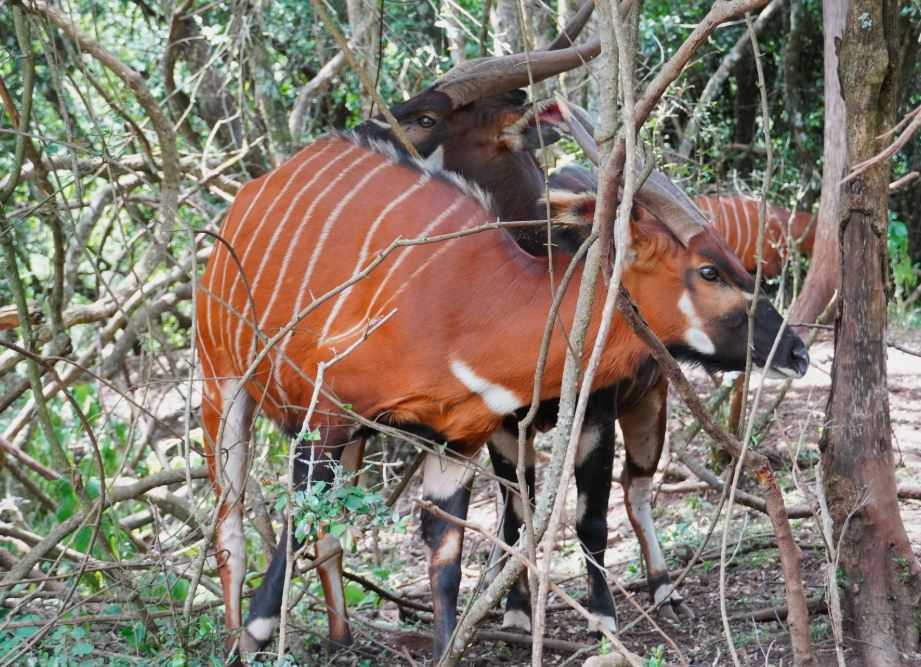
Mountain bongos live in Kenya’s cool, dense highland forests where thick vegetation provides food, water, and protection from predators. Their main habitats include the Aberdare Forest, Mount Kenya Forest, Mau Forest, and Eburu Forest ecosystems. These forests contain bamboo zones, shrubs, and natural salt licks that mountain bongos depend on for survival. Because they are shy and mostly nocturnal animals, they prefer remote areas with minimal human disturbance. Today, some mountain bongos also live in protected conservancies and breeding sanctuaries where conservationists monitor and protect the endangered population.
Want To Learn More On Boer Goat Price Start Here >>>
Why Mountain Bongos Are Endangered
Daily work includes
preparing feed
cleaning enclosures
monitoring animal health
checking for injuries
observing behavior
transporting sick animals for treatment
ensuring breeding areas remain calm and stress-free
Mountain bongos are critically endangered due to decades of habitat destruction, poaching, disease, and human encroachment into Kenya’s forests. Large sections of their natural habitat have been cleared for farming, logging, and settlement, reducing the safe forest cover they depend on for survival. Illegal hunting and snares have also heavily affected their population over the years.
Because mountain bongos are shy animals with low breeding rates, recovering their numbers is extremely difficult once populations decline. Climate change, forest degradation, and increased human activity continue to threaten the survival of the rare “Ghost of the Forest.”
Want To Learn More About The Sausage Tree-Kigelia Africana Start Here >>>
Main Threats Facing Mountain Bongos
interesting detail mentioned is that some sick bongos require isolation and hand-feeding to recover properly.
Habitat destruction from deforestation
Illegal poaching and bushmeat hunting
Wire snares set for other wild animals
Human encroachment into forest habitats
Expansion of farming activities
Logging and charcoal burning in forests
Forest fires and ecosystem degradation

Diseases transmitted from livestock
Low genetic diversity due to small populations
Climate change affecting forest ecosystems
Stress from increased human disturbance
Mountain Bongo Conservation Efforts in Kenya
According to Josephine , bongos can be selective feeders and may refuse unfamiliar food. Sick bongos sometimes need carefully managed diets during recovery.
Organizations such as Kenya Wildlife Service (KWS), Mount Kenya Wildlife Conservancy, and international conservation partners are working together to protect, breed, and reintroduce mountain bongos into secure forest habitats. Conservation programs focus on habitat restoration, anti-poaching patrols, veterinary care, genetic management, and controlled breeding to increase population numbers. Kenya has also received mountain bongos from European breeding programs to improve genetic diversity and strengthen recovery efforts. Through protected sanctuaries, scientific monitoring, and forest conservation, the country hopes to restore healthy mountain bongo populations back into the wild.
Difference Between Mountain and Lowland Bongos
Mountain bongos are larger, darker, and adapted to Kenya’s cool highland forests such as the Aberdares and Mount Kenya. They are also critically endangered and far rarer. Lowland bongos, on the other hand, live in tropical rainforests across Central and West Africa. They usually have brighter coats and slightly smaller body sizes. Mountain bongos also have thicker fur to survive colder mountain environments.
Can Tourists See Mountain Bongos in Kenya?

Yes, tourists can see mountain bongos in Kenya, although they are extremely rare and difficult to spot in the wild due to their shy and nocturnal nature. The best chances are usually in protected conservancies and breeding sanctuaries such as Mount Kenya Wildlife Conservancy
Interesting Facts About Mountain Bongos
bongos can become stressed very easily due to noise, unfamiliar environments, human activity and sudden movement. Stress can affect feeding patterns and breeding success, which is why conservancies try to maintain calm, quiet environments.
Mountain bongos are often called the “Ghost of the Forest” because they are shy and rarely seen.
They are one of the rarest antelopes in the world.
Both male and female bongos have long spiral horns.
Their white body stripes help camouflage them inside dense forests.
Mountain bongos are mostly nocturnal and active at night.
They can weigh over 400 kilograms.
Frequently Asked Questions About Mountain Bongos in Kenya

What is a mountain bongo?
A mountain bongo is a rare forest antelope found in Kenya’s highland forests. It is known for its reddish-brown coat with white stripes and large spiral horns.
How many mountain bongos are left in Kenya?
Mountain bongos are critically endangered, with only a small population remaining in the wild and in conservation sanctuaries across Kenya.
Experienced carers learn to “read” bongos through body language and movement.
Healthy bongos:
walk upright
browse actively
move smoothly
remain alert
Sick or stressed bongos may:
droop their ears
isolate themselves
refuse food
appear inactive
Where are mountain bongos found in Kenya?
Mountain bongos are mainly found in forests such as Mount Kenya, Aberdare Forest, Mau Forest, and protected conservancies.
Why are mountain bongos endangered?
They are threatened by habitat destruction, poaching, disease, and human encroachment into forest ecosystems.

What do mountain bongos eat?
Mountain bongos feed on leaves, bark, grass, fruits, shrubs, and other forest vegetation.
Are mountain bongos active at night?
Yes. Mountain bongos are mostly nocturnal and are more active during the evening and nighttime hours.
Can tourists see mountain bongos in Kenya?
Yes, tourists can sometimes see mountain bongos in protected conservancies and wildlife sanctuaries involved in breeding and conservation programs.
What is the difference between a mountain bongo and a lowland bongo?
Mountain bongos are darker, larger, and adapted to cool highland forests, while lowland bongos are found in tropical rainforests in Central and West Africa.
Why is Kenya bringing mountain bongos back from Europe?
Kenya is reintroducing genetically diverse bongos from European breeding programs to strengthen local conservation and breeding efforts.
Which organizations are helping conserve mountain bongos in Kenya?
Organizations such as Kenya Wildlife Service (KWS), Mount Kenya Wildlife Conservancy, and international conservation partners are helping protect and breed mountain bongos.


Comments