
Kenya Wildlife Data (2026): Population, Parks, Big Cats, Tourism & Conservation Statistics

Updated: May 16

Close-up of a lion drinking water, by ebbys_wild_eye at The Famous Maasai Mara National Reserve in Narok County
1.)Kenya Wildlife Overview
2.)Kenya Wildlife Population Statistics
4.)Lion Population in Kenya
5.)Big Cats Found in Kenya
6.)Wildlife Species in Kenya
7.)Kenya National Parks and Reserves Data
8.)Most Visited Parks in Kenya
10.)Human-Wildlife Conflict Statistics
11.)Endangered Animals in Kenya
12.)Kenya Wildlife Conservation Efforts
13.)Kenya Wildlife Service (KWS) Data
14.)Wildlife Economy in Kenya
15.)Wildlife Outside Protected Areas
17.)Kenya Wildlife Facts
18.)Frequently Asked Questions About Kenya Wildlife
Kenya has lost nearly 68% of wildlife population since 1977
Kenya has over 35,000 elephants

Lion lying on grass, looking directly at the camera with alert eyes by ebbys_wild_eye
Kenya is one of Africa’s most famous wildlife destinations, known globally for its rich biodiversity, iconic safari experiences, and vast protected ecosystems. The country hosts a wide variety of wildlife species including lions, elephants, leopards, cheetahs, rhinos, giraffes, zebras, buffaloes, hippos, crocodiles, and hundreds of bird species spread across savannahs, forests, wetlands, mountains, deserts, and marine ecosystems.

A Historic Homecoming as KWS Prepare to receive 4 Male Mountain Bongo from Czech Republic at JKIA
Famous destinations like Maasai Mara, Amboseli, Tsavo, Samburu, and Nairobi National Park attract tourists from around the world every year.

Want To Learn More On Kenya Forest Data Start Here >>>
Want To Learn More About Goat Manure Prices Start Here>>>
Want To Learn More About List of Forest In Kenya Start Here >>>
Want To Learn More About Cordia Africana Start Here >>>
Kenya’s wildlife is protected through national parks, reserves, conservancies, and community conservation programs managed by organizations such as the Kenya Wildlife Service (KWS).
Over 65% of Kenya’s wildlife lives outside protected areas.
Kenya Wildlife Population Statistics

Kenya hosts some of Africa’s most important wildlife populations, making the country a global leader in biodiversity conservation and safari tourism. According to Kenya Wildlife Service (KWS) reports, Kenya has over 35,000 elephants, one of the largest elephant populations in Africa.

Bongo antelope with striped coat stands in a wooden enclosure
The country is also home to significant populations of lions, leopards, cheetahs, buffaloes, giraffes, zebras, rhinos, wildebeests, and hippos distributed across national parks, reserves, conservancies, and community lands. However, conservation reports indicate that Kenya has lost nearly 68% of its wildlife population since 1977 due to habitat loss, climate change, human settlement expansion, poaching, and human-wildlife conflict.
Elephant Population in Kenya
Amboseli National Park is globally famous for large elephant herds.

KWS in camouflage hold a sign reading "DON’T CONSUME BUSH MEAT"
Kenya has one of the largest elephant populations in Africa, with over 35,000 elephants recorded across national parks, reserves, and conservancies. Large elephant herds are commonly found in Amboseli National Park, Tsavo East, Tsavo West, Samburu, and Laikipia ecosystems.
These elephants play an important ecological role by shaping vegetation, dispersing seeds, and supporting biodiversity. Conservation efforts by Kenya Wildlife Service and local communities have helped reduce poaching and improve elephant protection over the years.
Kenya Wildlife Service manages parks, reserves, sanctuaries, and marine protected areas.
Lion Population in Kenya

Kenya is home to thousands of lions living across savannah ecosystems, conservancies, and protected national parks. Major lion populations are found in Maasai Mara, Amboseli, Tsavo, Samburu, Nairobi National Park, and Laikipia. Lions are among Kenya’s biggest wildlife attractions and play a major role in safari tourism.
Big Cats Found in Kenya
Kenya is one of Africa’s top safari destinations.

The main big cats found in Kenya are lions, leopards, and cheetahs, commonly seen in parks such as Maasai Mara, Amboseli, Tsavo, Samburu, and Nairobi National Park. Lions are known for living in prides across open grasslands, while leopards are solitary and highly secretive predators often spotted near trees and rocky areas.
Cheetahs are famous for their incredible speed and are usually found in open savannahs. Kenya also hosts smaller wild cats like servals, caracals, and African wildcats in different habitats.
Wildlife Species in Kenya
Nairobi National Park is one of the few wildlife parks located near a capital city.

Kenya has one of the richest wildlife diversities in Africa, with mammals, birds, reptiles, marine life, and plant species spread across different ecosystems. The country is famous for elephants, lions, leopards, cheetahs, rhinos, giraffes, zebras, buffaloes, hippos, crocodiles, and wildebeests. Kenya also hosts rare species such as Grevy’s zebra, hirola antelope, African wild dogs, serval cats, and numerous migratory bird species found in parks, wetlands, forests, and conservancies.
Kenya National Parks and Reserves Data

Kenya has dozens of national parks, reserves, sanctuaries, and conservancies protecting wildlife, forests, wetlands, mountains, deserts, and marine ecosystems across the country. Some of the most visited parks include Maasai Mara, Amboseli, Tsavo East, Tsavo West, Nairobi National Park, Samburu, Lake Nakuru, and Meru National Park. These protected areas support tourism, conservation research, biodiversity protection, and local livelihoods.
Most Visited Parks in Kenya
Kenya hosts lions, leopards, cheetahs, rhinos, elephants, and rare wild cats.

Some of the most visited parks in Kenya include Maasai Mara National Reserve, Amboseli National Park, Nairobi National Park, Tsavo East, Tsavo West, Lake Nakuru National Park, and Samburu National Reserve. These parks attract tourists because of their rich wildlife populations, scenic landscapes, safari experiences, and famous attractions such as the Great Migration, elephant herds, flamingos, and big cats.
Wildlife Tourism in Kenya

Wildlife tourism is one of Kenya’s most important economic sectors, attracting millions of local and international visitors seeking safari experiences, nature exploration, and wildlife photography. Famous destinations such as Maasai Mara, Amboseli, Tsavo, Samburu, and Nairobi National Park generate income through park fees, hotels, tour operations, and conservation activities. Wildlife tourism also supports jobs, local communities, infrastructure development, environmental conservation, and protection of endangered species across Kenya’s diverse ecosystems.
Human-Wildlife Conflict Statistics

Human-wildlife conflict in Kenya has increased over the years due to population growth, habitat encroachment, climate change, drought, and expansion of farming activities near wildlife habitats. Common cases involve elephants destroying crops, lions attacking livestock, and dangerous encounters between communities and wildlife outside protected areas. Kenya Wildlife Service notes that a significant percentage of wildlife lives outside parks and reserves, increasing interaction with people.
Tsavo ecosystem is among the largest wildlife conservation areas in Kenya.
Conservation programs now focus on wildlife corridors, compensation schemes, community awareness, fencing projects, and coexistence strategies to reduce conflict while protecting biodiversity and local livelihoods.
Endangered Animals in Kenya

Some of the most endangered animals include black rhinos, Grevy’s zebras, hirolas, African wild dogs, mountain bongos, pangolins, and certain vulture species. Habitat loss, poaching, climate change, and human-wildlife conflict remain major threats to these animals. Kenya Wildlife Service and conservation organizations continue supporting species recovery, anti-poaching operations, habitat restoration, and community conservation initiatives across the country.
Kenya Wildlife Conservation Efforts

Kenya Wildlife Service and conservation partners continue strengthening wildlife conservation through anti-poaching operations, habitat restoration, species recovery programs, community conservancies, and wildlife research. Conservation efforts also focus on reducing human-wildlife conflict, protecting biodiversity, restoring ecosystems, and improving wildlife monitoring using modern technology. National parks, reserves, and community-led conservation initiatives play an important role in protecting endangered species and supporting sustainable wildlife tourism across Kenya.
Kenya has both terrestrial and marine protected wildlife ecosystems.
Kenya Wildlife Service (KWS) Data

Kenya Wildlife Service (KWS) is the government agency responsible for wildlife conservation, protected area management, anti-poaching operations, and biodiversity protection across Kenya. KWS manages many national parks, reserves, sanctuaries, and marine ecosystems while supporting community conservation and wildlife tourism. According to KWS strategic conservation reports, Kenya hosts over 35,000 elephants and a significant percentage of wildlife lives outside protected areas. KWS also focuses on species recovery programs, habitat restoration, climate resilience, conservation technology, and reducing human-wildlife conflict across the country.
Conservation efforts include anti-poaching, habitat restoration, and species recovery programs.
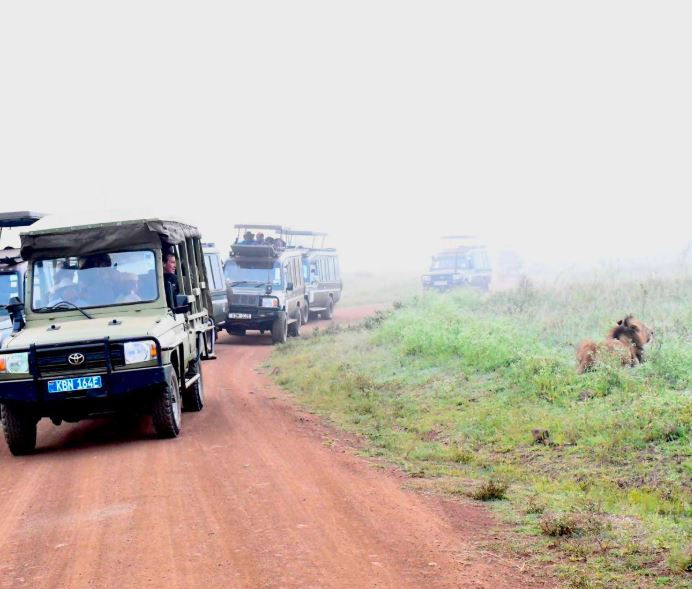
The wildlife economy in Kenya plays a major role in tourism, employment, conservation funding, and community livelihoods. Wildlife attractions such as lions, elephants, cheetahs, rhinos, and national parks generate revenue through safari tourism, park entry fees, hotels, tour operations, photography, and research activities. Kenya Wildlife Service recognizes wildlife as an important economic asset supporting foreign exchange earnings and sustainable development.
Wildlife Outside Protected Areas
A large percentage of Kenya’s wildlife lives outside national parks and reserves in community lands, conservancies, ranches, and wildlife corridors. These dispersal areas are important for animal migration, breeding, and feeding. However, increasing human settlement, farming, fencing, and infrastructure development continue threatening wildlife habitats. C
Climate change is increasingly affecting wildlife habitats, water sources, vegetation, and animal migration patterns across Kenya. Prolonged droughts, rising temperatures, unpredictable rainfall, and habitat degradation continue putting pressure on wildlife populations and ecosystems. Many animals are forced to move longer distances in search of water and food, increasing human-wildlife conflict.

Kenya is one of Africa’s leading wildlife destinations, home to lions, elephants, leopards, cheetahs, rhinos, giraffes, and hundreds of bird species. The country has diverse ecosystems including savannahs, forests, wetlands, mountains, deserts, and marine parks. Kenya’s wildlife tourism industry supports conservation, employment, research, and local communities while national parks and conservancies help protect endangered species and biodiversity.
Frequently Asked Questions About Kenya Wildlife
What is Kenya wildlife data?
Kenya wildlife data refers to information and statistics about wildlife populations, national parks, endangered species, tourism, conservation efforts, habitats, and biodiversity across Kenya.
Kenya is famous for lions, elephants, leopards, cheetahs, rhinos, giraffes, zebras, buffalos, wildebeests, and hippos found in national parks and reserves.
How many elephants are in Kenya?
Kenya has over 35,000 elephants according to recent wildlife conservation reports and Kenya Wildlife Service data.
Does Kenya still have lions?
Yes. Kenya still has healthy lion populations living in protected areas such as Maasai Mara, Amboseli, Tsavo, Samburu, and Nairobi National Park.

What are the big cats found in Kenya?
The main big cats found in Kenya are lions, leopards, and cheetahs. Smaller wild cats like servals and caracals are also found in different habitats.
Which is the best park for wildlife viewing in Kenya?
Maasai Mara National Reserve is considered one of the best parks for wildlife viewing because of its high concentration of predators and the Great Migration.
What is the role of Kenya Wildlife Service (KWS)?
Kenya Wildlife Service is responsible for wildlife conservation, park management, anti-poaching operations, habitat protection, and promoting sustainable wildlife tourism in Kenya.
Are wildlife populations declining in Kenya?
Some wildlife populations in Kenya have declined over the years due to habitat loss, climate change, poaching, and human-wildlife conflict, although conservation efforts continue to improve recovery.
How important is wildlife tourism in Kenya?
Wildlife tourism is one of Kenya’s major economic sectors. National parks and safari tourism generate jobs, foreign exchange, and support conservation efforts.
Which national parks are most popular in Kenya?
Popular parks include Maasai Mara, Amboseli National Park, Tsavo East, Tsavo West, Nairobi National Park, Samburu, Lake Nakuru, and Meru National Park.
Are there endangered animals in Kenya?
Yes. Kenya is home to endangered species such as black rhinos, Grevy’s zebras, African wild dogs, hirolas, and some vulture species.
What causes human-wildlife conflict in Kenya?
Human-wildlife conflict is mainly caused by habitat encroachment, population growth, drought, competition for water and grazing land, and wildlife movement outside protected areas.
Why is Kenya important for wildlife conservation?
Kenya is globally important for wildlife conservation because it hosts diverse ecosystems, world-famous safari destinations, rare species, and major wildlife migration routes.
What percentage of wildlife lives outside protected areas in Kenya?
A large percentage of Kenya’s wildlife lives outside national parks and reserves in community lands, conservancies, and dispersal areas.
What is the best time to see wildlife in Kenya?
The dry seasons from June to October and January to February are usually the best times for wildlife viewing because animals gather near water sources and vegetation is less dense



Comments