
Ploughing Cost Per Acre in Kenya (2026 Guide): Virgin vs Uncultivated Land Explained

Updated: Mar 25

2.)What Determines Ploughing Cost Per Acre in Kenya
4.)Cost of Harrowing in Kenya
6.)Zero Tillage Farming in Kenya
8.)Frequently Asked Questions (FAQ) – Ploughing Cost Per Acre in Kenya
Why Farming Costs Are Rising in Kenya (And Why Your Land Preparation Method Matters More Than Ever)

Farming in Kenya is no longer just about planting and waiting for harvest — it has become a game of smart decisions, timing, and cost control. Many farmers today are quietly shifting their strategies, not because they want to, but because the cost of farming has gone up significantly.
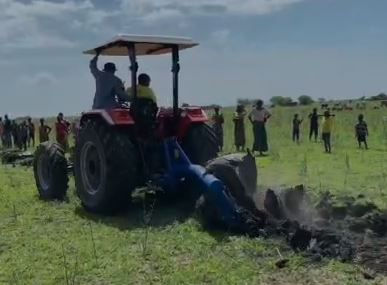
From land preparation to weeding, every step now requires careful planning to avoid losses. For example, hiring labor for weeding has become so expensive that many farmers now prefer spraying herbicides instead. What used to be a labor-driven process is quickly becoming machine and input-driven, and that shift is changing how farming works across Kenya.
But it doesn’t stop there.

The type of crop you plant and what other farmers around you are growing can also affect your costs. Take wheat farming for instance — if you plant just one acre in an area where no one else is growing wheat, getting a combine harvester becomes difficult and expensive. Machinery like harvesters and tractors often depend on economies of scale, meaning they are cheaper when many farmers in the same area are growing the same crop.

Even when tractors are available, they are not always the best solution. During rainy or muddy conditions, tractors can struggle, sometimes ploughing unevenly and leaving parts of the land poorly prepared. This is why, in some cases, farmers still prefer using animals like oxen.
Activity | Cost per Acre (KES) |
Virgin Land Ploughing | 4,500 |
Harrowing | 1,500 |
Total (Virgin Land) | 6,000 |
Uncultivated Land | 3,000 |
Animal Plough | 2,000 |
What Determines Ploughing Cost Per Acre in Kenya
The cost of ploughing per acre in Kenya is influenced by several key factors. Soil condition is the biggest determinant—virgin land with hard pan requires more fuel and effort than previously cultivated land. Terrain also matters; rocky or sloped land increases difficulty and cost. Equipment availability affects pricing, especially during peak seasons when tractors are scarce. Weather conditions, such as muddy fields, can slow down work and lead to uneven ploughing. Additionally, location and transport costs for moving machinery to the farm can significantly impact the final price per acre.
Virgin Land vs Uncultivated Land

Virgin land refers to soil that has never been farmed before and often contains hard, compact layers known as hard pan. This makes it more difficult and expensive to plough, usually requiring both ploughing and harrowing to achieve a good seedbed. In contrast, uncultivated (previously farmed) land has already been loosened over time, making it easier to work on. It typically requires less effort, fuel, and time, and in some cases, farmers can skip harrowing altogether, reducing overall land preparation costs.
Cost of Harrowing in Kenya

Harrowing in Kenya typically costs around KES 1,500 per acre, though prices may vary depending on location, tractor availability, and soil condition. This process is done after ploughing to break down large soil clods and create a fine, even seedbed suitable for planting.

Harrowing improves seed-to-soil contact, enhances germination, and promotes uniform crop growth. For virgin land, harrowing is almost always necessary, while for previously cultivated land, it may be optional depending on how loose the soil is after ploughing.
Tractor vs Animal Ploughing Cost
While slower, it is more affordable and offers better control, especially on small farms or muddy terrain where tractors may struggle.

The cost of ploughing in Kenya varies depending on whether a farmer uses a tractor or animal power. Tractor ploughing typically ranges between KES 3,000 and KES 4,500 per acre, making it faster and ideal for large-scale farming. However, availability and fuel costs can affect pricing. On the other hand, animal ploughing using oxen or bulls costs around KES 2,000 per acre.
Zero Tillage Farming in Kenya
Zero tillage, also known as no-till farming, is a modern method where the soil is left undisturbed and seeds are planted directly into the ground. Instead of ploughing, farmers use herbicides to control weeds and specialized equipment to place seeds. This method helps retain soil moisture, reduce erosion, and lower fuel and labor costs. In Kenya, zero tillage is gaining popularity, especially in dry regions where conserving moisture is critical. Although initial setup may require proper planning, it offers long-term savings and improved soil health.
Transport charges for moving tractors to the farm are common, especially in remote areas. Fuel surcharges may also be added when soil is hard or work takes longer than expected. In some cases, land clearing (removing bushes or stumps) is charged separately. Farmers may also incur costs from multiple passes on tough soil or delays caused by weather, which can increase labor and equipment costs.
Frequently Asked Questions (FAQ) – Ploughing Cost Per Acre in Kenya

What is the ploughing cost per acre in Kenya?
Ploughing in Kenya typically costs between KES 3,000 and KES 4,500 per acre. The price depends on whether the land is virgin (never farmed before) or previously cultivated. Virgin land is more expensive due to harder soil conditions.
Why is virgin land more expensive to plough?
Virgin land has hard pan soil and compact layers that have never been broken. This makes it harder for tractors to penetrate, requiring more fuel, time, and effort. In most cases, it also requires harrowing after ploughing, increasing the total cost.
How much does it cost to prepare virgin land per acre in Kenya?
Preparing virgin land can cost around:
Ploughing: KES 4,500
Harrowing: KES 1,500
Total: About KES 6,000 per acre
What is the cost of ploughing previously cultivated land?

For land that has already been farmed before, ploughing costs around KES 3,000 per acre. The soil is softer, and in some cases, harrowing may not be necessary.
What is harrowing and why is it important?
Harrowing is the process of breaking down soil clods after ploughing to create a fine seedbed. It helps improve:
Seed germination
Soil aeration
Root penetration
Harrowing typically costs KES 1,500 per acre.
Do all farms require harrowing before planting?
No. Virgin land always requires harrowing, but for previously cultivated land, it depends on soil condition. Some farmers skip harrowing if the soil is already loose enough for planting.
How much does animal (ox or bull) ploughing cost in Kenya?
Animal ploughing costs about KES 2,000 per acre. It is commonly used in rural areas or where tractors cannot access the land. It is slower but more affordable for small-scale farmers.
Which is better: tractor ploughing or animal ploughing?
Tractor ploughing: Faster, efficient, best for large farms
Animal ploughing: Cheaper, suitable for small farms and rough terrain
The choice depends on your budget, farm size, and accessibility.
What is zero tillage farming and is it cheaper?
Zero tillage is a method where the soil is not turned over. Seeds are planted directly into the soil, helping retain moisture and reduce soil disturbance.
Several factors influence the cost:
Soil type (hard or soft)
Terrain (flat or rocky)
Fuel prices
Distance/transport of tractor
Type of equipment used
Land history (virgin vs cultivated)
Many farmers overlook:
Transport charges for tractors
Extra passes on hard soil
Land clearing (bush removal)
Fuel surcharges


What’s shifting is less about technique and more about risk management under pressure, where timing and inputs become financial decisions as much as agricultural ones. In that sense https://nzhistoricalsocieties.org.nz/ Royal Reels feels unrelated, since outcomes hinge on margins, weather variability, and access to capital rather than visibility or reach.
Cost differences here seem less about a flat rate and more about hidden variables like soil history, equipment wear, and time inefficiencies. In other areas like https://info2017.com/ The Pokies pricing can feel standardized, but agriculture exposes how context specific inputs reshape what appears to be a simple metric.