
KEFRI Seeds Price List in Kenya (2026): Full Catalogue, Prices & How to Buy

Updated: Jan 15

By the end of this section you will have learnt
1.)What Is KEFRI and the Kenya Forestry Seed Centre
2.)KEFRI Seeds Price List in Kenya (2026 Updated)
3.)Most Searched KEFRI Tree Seeds
4.)KEFRI Seed Prices for Export (USD Rates Explained)
5.)KEFRI Seed Collection Periods (Best Time to Order)
6.)How to Buy Seeds from KEFRI Seed Centre
7.)KEFRI Seeds vs Private Tree Seed Suppliers in Kenya****
8.)Tree Planting Procedure By KEFRI
9.)KEFRI Locations and Regional Centers
10.)KEFRI seed price List
11.)KEFRI contacts
12.)KEFRI’s Goals
13.) Key Functions of KEFRI
14.) KEFRI’s Management Structure
16.) KEFRI’s key partners
17.)FAQs About KEFRI Seeds in Kenya

Image of Sesbania Sesban
The Kenya Forestry Research Institute (KEFRI) is a national public research institution mandated to conduct forestry research, support sustainable forest management, and guide tree-based development in Kenya.
established in the year 1986 with a mission to advance the sustainable management, conservation, and utilization of Kenya's forest resources.

Image of a section of KEFRI managed forests in kenya
KEFRI operates under the Ministry of Environment, Climate Change, and Forestry, focusing on innovative research, development, and outreach programs that support both Kenya’s forestry sector and broader environmental goals.
Under KEFRI operates the Kenya Forestry Seed Centre (KFSC), established to supply certified, high-quality tree seeds for reforestation, agroforestry, conservation, and commercial forestry.
Save Indigenous Tree Seeds Before They Are Lost Forever
Save Indigenous Tree Seeds Before They Are Lost Forever

Image of Kigelia africana also known as sausage tree by Thompson safaris
The Seed Centre collects seeds from selected seed stands across different ecological zones, conducts quality testing for germination and purity, and provides planting guidance to buyers, ensuring reliable and region-appropriate tree establishment across Kenya.
Need KEFRI Tree Seeds but You’re Far from Nairobi?
We help farmers, schools, NGOs, and tree growers source KEFRI-certified seeds and deliver them to your location—at a small facilitation fee.
👉 Request KEFRI Seeds Click Here >>> (Fast Response)

Image of Senna spectabilis is a plant species of the legume family native to South and Central America.
KEFRI Seeds Price List in Kenya (2026 Updated)
Demand peaks during national planting seasons, and buyers are encouraged to plan early to secure availability, as some high-value or seasonal seeds can sell out quickly.
KEFRI seeds are among the most widely bought tree seeds in Kenya, trusted by farmers, nurseries, NGOs, and county governments for quality and reliability. Some of the most purchased seeds include Eucalyptus species (for timber, poles, and fuelwood), Grevillea robusta (for shade and timber), Melia volkensii (for drought-tolerant wood), and Indigenous hardwoods like African mahogany and Prunus africana. Prices are typically listed per kilogram, with common species priced affordably for commercial and smallholder use.
Don’t Travel—Let Us Source KEFRI Seeds for You
Tell us the species, quantity, and location. We’ll handle the rest.
Most Searched KEFRI Tree Seeds
Save Indigenous Tree Seeds Before They Are Lost Forever
Eucalyptus seeds rank at the top due to their fast growth, multiple uses (timber, poles, fuelwood), and adaptability. Grevillea robusta seeds are commonly sought for shade trees and timber, while Melia volkensii seeds are popular in dryland forestry because of drought tolerance. Indigenous hardwood seeds like Prunus africana and African mahogany also show strong search demand, driven by conservation and high-value timber markets.
KEFRI Seed Prices for Export (USD Rates Explained)
KEFRI offers select tree seeds for export with prices quoted in USD per kilogram, reflecting global demand and higher processing costs. Export pricing typically applies to high-value indigenous species and large orders for reforestation or commercial forestry projects. Buyers must consider shipping, phytosanitary certification, and export regulations. Understanding USD pricing helps international buyers budget accurately and compare costs with local suppliers.
KEFRI Seed Collection Periods (Best Time to Order)
Planning purchases around collection periods ensures higher germination rates, better seed quality, and timely delivery for planting seasons across different ecological zones in Kenya.
Some seeds are available year-round from cold storage, while others—especially indigenous and recalcitrant species—can only be collected during specific months. Ordering early is critical, as KEFRI often requires advance notice (up to one month) for seasonal seeds.
How to Buy Seeds from KEFRI Seed Centre
KEFRI Seed Sourcing & Delivery Assistance (Nationwide)
Buying seeds directly from KEFRI Seed Centres can be difficult for farmers, schools, NGOs, and tree-planting projects located far from Nairobi or other KEFRI stations. Many buyers struggle with identifying the right species, confirming availability, understanding seasonal collection periods, and arranging transport.
BeyondForest offers a seed sourcing and facilitation service to help you access KEFRI-certified tree seeds remotely—without the need to travel.
What We Help You With
Identifying the right tree species for your location and purpose
Confirming seed availability, prices, and collection periods
Placing orders and purchasing seeds on your behalf
Coordinating pickup, packaging, and delivery to your location
Advising on seed handling and planting readiness
We are not KEFRI agents or resellers. We act as an independent facilitator to save you time, travel costs, and costly mistakes.
Who This Service Is For
Farmers and private tree growers
NGOs and donor-funded tree planting projects
Schools and institutions
County governments and community groups
Nurseries sourcing certified parent seed
Service Fee
A transparent facilitation fee applies depending on order size, distance, and complexity. All KEFRI seed costs are shared openly with clients before purchase.
KEFRI Tree Planting Procedure

Planning a tree planting project?
Avoid wrong species, missed seasons, and unnecessary travel.
We’ll source the right KEFRI seeds for you.
step 1.)
Weed Clearing
Prepare planting site by clearing the weeds

Image of a markhamia lutea tree also known as the Nile tulip
2.)Planting Objective
Understand the planting objective.whether for Timber,Fuelwood,Rehabilitation,Urban Forestry or boundary planting

Image of Araucaria cunninghamii seedlings by Mumbi Liz
3.)Right Species at the correct site

Image of Syzygium guineense an evergreen leafy forest tree found in many parts of Africa
Plant the right species at the correct site as advised by technical experts by using the jaza miti app
4.)Seedling Handling
Handle the seedling carefully to the planting site to ensure roots and stems are intact

Image of a Hibiscus Tree whose Scientific name is Hibiscus rosa-sinensis
5.)Determine spacing
Timber Spacing 2.5 m by 2.5 m for Cypress and Pines

Image of Senna siamea, also known as Siamese cassia often used as shade tree in cocoa, coffee and tea plantations.
6.)Dig Holes
Dig holes double the size of potting tube in terms of depth and width .This ensures tree planted leave space at the bottom and then plant tree at the level root collar .Do not bury the tree plant it
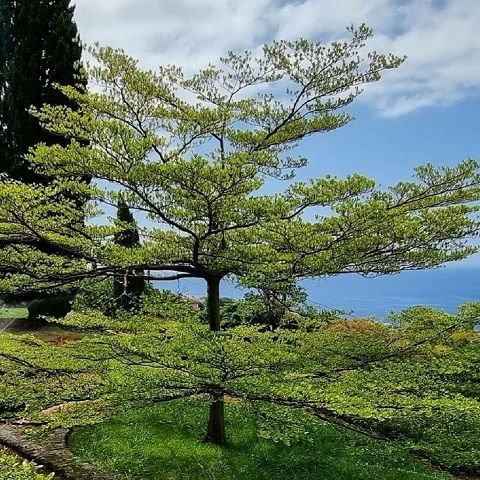
Image of Terminalia mentalis some call it Umbrella tree though not

Put the seedling at the middle of planting at an upright position where applicable support the seedling
Put quarter of top soil back in the planting hole then place the seedling and cover it with soil ,then firm up the seedling
Water the seedling
Report on species and number of trees planted in Jazamiti app

Image of a Kei apple fruit

Image of a candle nut tree also known as Aleurites Moluccana the state tree of Hawai'i, traditionally a source of dye
Kei Apple | 10Ksh |
Warbugia ugandensis | 50Khs |
Acacia xanthopholea | 30Ksh |
Acokanthera schimperi | 50Ksh |
Acrocarpus fraxinifolia | 10Ksh |
Araucaria cannighamii | 50Ksh |
Australian flame | 50Ksh |
Avocados | 50Ksh |
Bambusa Dentrocalamus | 200Ksh |
Bambusa Striata | 150Ksh |
Bambusa Vulgaris | 150Ksh |
Brachyleana huillensis | 50Ksh |
Cupressus Lusitanica | 10Ksh |
Candle Nut | 50Ksh |
Caesalpinia spinosa | 10Ksh |
Calistemon citrinus | 10Ksh |
Calistemon lanceolatus | 10Ksh |
Calondendrum capense | 50Ksh |
Casuarina equisetifolia | 10Ksh |
Casuarina jughuniana | 10Ksh |
Combretum schumanii | 10Ksh |
Cordia abyssinica | 10Ksh |
Cordia Africana | 50Ksh |
Croton macrostachyus | 10Ksh |
Croton Megalocarpus | 30Ksh |
Dovyalis caffra | 10Ksh |
Elacondendron buchananii | 50Ksh |
Eucalyptus globulus | 10Ksh |
Eucalyptus Grandis | 10Ksh |
Eucalyptus maculata | 10Ksh |
Eucalyptus saligna | 10Ksh |
Gmelina arborea | 10Ksh |
Gravillea Robusta | 10Ksh |
Hibiscus | 10Ksh |
Juniperus Procera | 30Ksh |
Kigelia Africana | 50Ksh |
Markhamia Lutea | 30Ksh |
Melia Azedarach | 10Ksh |
Nandi Flame | 50Ksh |
Olea Africana | 10Ksh |
Passion Fruit | 10Ksh |
Pinus Patula | 10Ksh |
Podocarpus gracillior | 50Ksh |
Polysias Kikuyensis | 10Ksh |
Premna maxima | 10Ksh |
Prunus Africana | 10Ksh |
Royal Palm | 50Ksh |
Schinus Molle | 30Ksh |
Strychnos henningsii | 50Ksh |
Syzygium guineense | 100Ksh |
Teclea nobilis | 50Ksh |
Thika Palm | 50Ksh |
Thuya orintiaris | 50Ksh |
Tree tomato | 10Ksh |
Trichilia emetica | 50Ksh |
Vitex keniensis | 50Ksh |
Warbugia ugandensis | 50Ksh |
Yushania Albina | 50Ksh |
Acacia melifera | 20Ksh |
Acacia senegal | 10Ksh |
Aloe vera spp | 100Ksh |
Azadirachta indica | 20Ksh |
Banalite aegyptica | 20Ksh |
Carica papaya | 10Ksh |
Cordia sinensis | 10Ksh |
Delonix regia | 10Ksh |
Dobera glabra | 20Ksh |
Luecaena leucocephala | 50Ksh |
Melia volkensii | 20Ksh |
Moringa oloifera | 20Ksh |
Salvadora persica | 20Ksh |
Senna siamea | 20Ksh |
Syzygium cuminii | 20Ksh |
Terminalia mentalis | 20Ksh |
Afzuelia quansensis | 20Ksh |
Brachystegia speciformis | 20Ksh |
Eucalyptus Camaldulensis | 10Ksh |
Eucalyptus europhyla | 10Ksh |
Ficus sycomorus | 20Ksh |
Hymenia verucosa | 20Ksh |
Lecanoides fraxinifolius | 20Ksh |
Majidea zanguebarica | 20Ksh |
Mimusops fruiticosa | 20Ksh |
Pleustrolyia africana | 20Ksh |
Polysphaeria multiflora | 20Ksh |
Terminalia cattapa | 20Ksh |
Terminalia spinosa | 20Ksh |
Bischovia javonica | 10Ksh |
Jacaranda mimosifolia | 20Ksh |
Senna spectabillis | 10Ksh |
Sesbania Sesban | 10Ksh |
KEFRI Locations and Regional Centers

Image of KEFRI National forest product research programme centre
KEFRI operates a network of research centers and regional offices across Kenya. These centers facilitate forestry research, community outreach, and conservation initiatives, each tailored to address the specific environmental conditions of the region.
Each of these centers conducts region-specific research, providing technologies and strategies for forestry and conservation that align with the unique ecological conditions of their respective areas. .
This decentralized approach helps KEFRI effectively reach diverse communities, allowing it to tackle region-specific challenges such as drought in drylands or soil erosion in highlands
KEFRI Headquarters
KEFRI Headquarters is located in Muguga Kiambu county and the function is for administration, major research programs, partnerships, and seed production 23 km north-west of Nairobi, off Nairobi - Nakuru highway
KEFRI Regional Research Centers
Coast Eco-Region Research Centre (CERC) - Based in Gede, Kilifi County
Focuses on coastal forests, mangrove ecosystems, and agroforestry suitable for coastal climates.
Central Highlands Eco-Region Research Centre (CHERC) - Based in Karura, Nairobi
Addresses highland forests, community forestry, and conservation in central Kenya.
Drylands Eco-Region Research Centre (DERC) - Based in Kibwezi, Makueni County
Focuses on dryland afforestation, desertification control, and water-efficient agriculture for arid and semi-arid areas.
Lake Victoria Basin Eco-Region Research Centre (LVBRC) - Based in Maseno, Kisumu County
Conducts research on lake basin ecosystems, agroforestry, and the conservation of indigenous species.
North Rift Eco-Region Research Centre (NRERC) - Based in Londiani, Kericho County
Covers research in forested highlands and rift valley ecosystems.
Western Eco-Region Research Centre (WERC) - Based in Kakamega, Kakamega County
Works on biodiversity conservation, particularly in indigenous forests like Kakamega Forest.
KEFRI Contacts
20412-00200 ,Nairobi, Kenya.
+254 722 157 414
+254 (0) 724 259781/2
KEFRI seed price List

Image of Dobera glabra an evergreen shrub native to Somalia, Djibouti, and Ethiopia.
Diospyros cornii | 1500Ksh |
Diospyros mespiliformis | 2000Ksh |
Diospyros scabra | 1500Ksh |
Dobera glabra | 1000Ksh |
Dodonea viscosa | 8000Ksh |
Dombeya torrida | 5000Ksh |
Dovyalis abyssinica | 4000Ksh |
Dovyalis caffra | 2000Ksh |
Drypetes gerradii | 1500Ksh |
Ehretia cymosa | 3500Ksh |
Entada abyssinica | 800Ksh |
Erythrina burttii | 3000Ksh |
Erythrophloeum guineese | 1500Ksh |
Eucalyptus camaldulensis) | 5000Ksh |
Eucalyptus ficifolia | 5000Ksh |
Eucalyptus globulus | 5000Ksh |
Eucalyptus grandis | 5000Ksh |
Eucalyptus maculata | 5000Ksh |
Eucalyptus paniculata | 4000Ksh |
Eucalyptus regnans | 5000Ksh |
Eucalyptus saligna | 5000Ksh |
Eucalyptus urophylla | 4000Ksh |
Faidhebia albida | 3500Ksh |
Faurea saligna | 4000Ksh |
Flacourtia indica | 2500Ksh |
Fraxinus pennsylvanica | 1000Ksh |
Gardenia volkensii | 1000Ksh |
Gmelina arborea | 2000Ksh |
Grevillea robusta | 5000Ksh |
Grewia discolor | 1000Ksh |
Grewia villosa | 1000Ksh |
Gliricidia sepium | 4000Ksh |
Gyrocarpus americanus | 1200Ksh |
Hagenia abyssinica | 2500Ksh |
Hakea saligna | 5000Ksh |
Harungana madagascariensis | 2000Ksh |
Hymenaea verrucosa | 1000Ksh |
Hyphaene compressa | 500Ksh |
Hyphaene coriacea | 500Ksh |
Jacaranda mimosifolia | 4000Ksh |
Jatropha curcas | 1000Ksh |
Juniperus procera | 2000Ksh |
Khaya anthotheca | 1500Ksh |
Kigelia africana | 2000Ksh |
Lannea elata | 1500Ksh |
Lawsonia inermis | 1500Ksh |
Leucaena diversifolia | 2000Ksh |
Leucaena leucocephala | 1500Ksh |
Leucaena pallida | 2000Ksh |
Leucaena trichandra | 2500Ksh |
Allophylus abyssinicus | 1200Ksh |
Araucaria angustifolia | 1500Ksh |
Araucaria cunninghamii | 2000Ksh |
Atriplex numularia | 600Ksh |
Azanza garckeana | 1500Ksh |
Balanites aegyptiaca | 1000Ksh |
Balanites orbicularis | 1000Ksh |
Balanites wilsoniana | 600Ksh |
Berchemia discolor | 2000Ksh |
Acokanthera schimperi | 1500Ksh |
Acrocarpus fraxinifolius | 2500Ksh |
Adansonia digitata | 1000Ksh |
Adenanthera pavonina | 3500Ksh |
Afzelia quanzensis | 2000Ksh |
Albizia coriaria | 3000Ksh |
Albizia grandibracteata | 3500Ksh |
Albizia gummifera | 3500Ksh |
Albizia lebbeck | 3000Ksh |
Albizia lophantha | 2000Ksh |
Albizia procera | 2000Ksh |
Acacia kirkii | 1500Ksh |
Acacia lahai | 1000Ksh |
Acacia mangium | 4000Ksh |
Acacia mearnsii | 1000Ksh |
Acacia melanoxolyn | 1000Ksh |
Acacia mellifera | 2000Ksh |
Acacia nilotica | 1000Ksh |
Acacia nubica | 800Ksh |
Acacia polyacantha | 2000Ksh |
Acacia reficiens | 800Ksh |
Acacia Senegal | 2000Ksh |
Acacia seyal | 2000Ksh |
Acacia sieberiana | 1500Ksh |
Acacia tortilis | 2000Ksh |
Acacia xanthopholea | 3500Ksh |
Acacia zanzibarica | 800Ksh |
Ziziphus mauritiana | 1000Ksh |
Ziziphus mucronata | 1000Ksh |
Acacia abyssinica | 1200Ksh |
Acacia brevispica | 1000Ksh |
Acacia drepanolobium | 1500Ksh |
Acacia elatior | 2000Ksh |
Acacia gerrardii | 1500Ksh |
Acacia horrida | 1000Ksh |
Tecoma stans | 5000Ksh |
Tectona grandis | 1000Ksh |
Terminali mentalis | 1200Ksh |
Terminalia brownii (Extracted) | 3000Ksh |
Terminalia brownii (fruits) | 800Ksh |
Terminalia prunoides | 800Ksh |
Terminalia spinosa | 1500Ksh |
Thevetia peruviana | 800Ksh |
Tipuana tipu | 1000Ksh |
Tristinia conferta | 3500Ksh |
Vangueria madagascariensis | 2500Ksh |
Vitex keniensis | 1500Ksh |
Vitex payos | 1500Ksh |
Ximenia americana | 1000Ksh |
Zanthoxylum gilletii | 1200Ksh |
Ziziphus abyssinica | 1000Ksh |
Senna spectabilis | 1500Ksh |
Sesbania grandiflora | 1500Ksh |
Sesbania sesban | 1500Ksh |
Spathodea campanulata | 3500Ksh |
Strychnos henningsii | 2000Ksh |
Syncarpia laurifolia | 3000Ksh |
Tamarindus indica | 2000Ksh |
Teclea nobilis | 3000Ksh |
Paramacrolobium coeruleum | 1000Ksh |
Parkinsonia aculeata | 1000Ksh |
Phoenix reclinata | 1000Ksh |
Piliostigma thonningii | 800Ksh |
Pinus caribaea | 5000Ksh |
Pinus patula | 7000Ksh |
Pinus radiata | 5000Ksh |
Pithecellobium dulce | 1000Ksh |
Podocarpus falcatus | 1500Ksh |
Polyscias fulva | 4000Ksh |
Polyscias kikuyuensis | 4000Ksh |
Premna maxima | 3500Ksh |
Pyracantha angustifolia | 4000Ksh |
Schinus molle | 1500Ksh |
Sclerocarya birrea | 600Ksh |
Senna siamea | 2000Ksh |
Maesopsis eminii | 1000Ksh |
Markhamia lutea | 2000Ksh |
Melia azedarach | 2500Ksh |
Melia Volkensii | 6000Ksh |
Melia Volkensii nuts | 800Ksh |
Milicia excelsa | 5000Ksh |
Milletia dura | 2000Ksh |
Mimusops kummel | 1000Ksh |
Moringa oleifera | 1500Ksh |
Moringa stenopetala | 3000Ksh |
Myrianthus holstii | 4000Ksh |
Mystroxylon aethiopicum | 1500Ksh |
Newtonia buchananii | 3500Ksh |
Newtonia hildebrandtii | 3500Ksh |
Newtonia paucijuga | 1000Ksh |
Ocotea usambarensis | 5000Ksh |
Olea capensis ssp .hochstetteri | 3000Ksh |
Olea capensis ssp .welwitchii | 3500Ksh |
Olea europaea ssp. africana | 3000Ksh |
Bischovia javonica | 2500Ksh |
Brachychiton acerifolium | 3000Ksh |
Brachylaena huillensis | 5000Ksh |
Brachystegia speciformis | 1000Ksh |
Caesalpinia volkensii | 3500Ksh |
Calliandra calothyrsus | 3000Ksh |
Dichostachys cinerea | 2000Ksh |
Diospyros abyssinica | 1500Ksh |
Cupressus lusitanica | 5000Ksh |
Cupressus pyramidalis | 5000Ksh |
Dalbergia melanoxylon | 1000Ksh |
Delonix elata | 4000Ksh |
Delonix regia | 1000Ksh |
Dialium orientale | 1500Ksh |
Dialium orientale | 1500Ksh |
Callistemon citrinus | 4000Ksh |
Callistemon lanceolatus | 4000Ksh |
Callistemon viminalis | 4000Ksh |
Callitris robusta | 1000Ksh |
Calodendrum capense | 1500Ksh |
Casearia battiscombe | 3500Ksh |
Casuarina equisetifolia | 5000Ksh |
Casuarina jughuniana | 5000Ksh |
Celtis africana | 3500Ksh |
Chorisia speciosa | 2000Ksh |
Chorisia ventricosa | 2000Ksh |
Combretum schumannii | 800Ksh |
Combretum zeyheri | 800Ksh |
Commiphora baluensis | 4000Ksh |
Conocorpus lancifolius | 1000Ksh |
Cordeuxia edulis | 3000Ksh |
Cordia africana | 2000Ksh |
Cordia monoica | 2500Ksh |
Cordia sinensis | 2000Ksh |
Craibia brownii | 1000Ksh |
Croton macrostachyus | 2000Ksh |
Cryptomeria japonica | 2000Ksh |
Croton megalocarpus | 1000Ksh |
KEFRI’s Mission, Vision, and Objectives
KEFRI’s mission is to conduct research, innovate, and provide information and technology to support sustainable forestry and environmental management. Its vision is to be a world-class center of excellence in forestry and allied natural resources research, contributing to environmental sustainability, biodiversity conservation, and national development.
KEFRI's core objectives include:
Conducting research in forestry, agroforestry, and related natural resources.
Developing and disseminating technologies to promote sustainable forest management.
Contributing to forest policy formulation through research-based evidence.
Enhancing Kenya’s forest cover and promoting biodiversity conservation.
Supporting climate adaptation and mitigation through tree planting and agroforestry.
Key Functions of KEFRI
KEFRI’s work spans various programs and activities, with each function tailored to address specific challenges in the forestry and environmental sectors
Forestry Research
KEFRI conducts applied and adaptive research to solve challenges related to sustainable forest management. Research areas include afforestation, reforestation, forest ecology, conservation, biodiversity, and forest-based livelihoods.
Agroforestry
Recognizing the importance of integrating trees into farming systems, KEFRI promotes agroforestry practices that improve soil quality, reduce erosion, and increase farm productivity. Agroforestry helps smallholder farmers create sustainable land-use systems.
Forest Conservation
Through research and community engagement, KEFRI develops strategies for conserving natural forests and endangered species. Conservation efforts are directed at promoting ecosystem restoration, reforestation, and natural resource management.
Climate Change Mitigation and Adaptation
KEFRI contributes to climate action by promoting practices that reduce greenhouse gas emissions from deforestation, enhance carbon sequestration, and adapt forest ecosystems to climate impacts.
Capacity Building and Community Outreach
KEFRI provides training for forest management professionals, community groups, and extension officers, offering them tools and knowledge to implement sustainable forestry practices. The organization is involved in public awareness initiatives, promoting tree planting, forest conservation, and agroforestry practices.
Tree Seed Production and Distribution
KEFRI’s certified tree seed center produces high-quality seeds of both indigenous and exotic species. By ensuring the availability of quality planting material, KEFRI supports reforestation efforts, biodiversity conservation, and Kenya’s ambitious reforestation goals.
3. KEFRI’s Management Structure
KEFRI is governed by a Board of Directors appointed by the Cabinet Secretary of the Ministry of Environment, Climate Change, and Forestry. The board provides policy direction, ensures resource allocation aligns with the institute's objectives, and oversees strategic decision-making. The Director of KEFRI is the head of the institution, managing the institute’s day-to-day operations and ensuring the implementation of research projects, programs, and outreach activities.
KEFRI’s management structure includes several directorates, each focusing on a specific aspect of the organization’s mandate:
Research and Development: This department conducts research, develops technologies, and ensures that new innovations are in line with Kenya’s environmental and developmental goals.
Partnerships and Business Development: KEFRI collaborates with international organizations, government bodies, NGOs, and communities to advance sustainable forestry practices and promote technology transfer.
Finance and Administration: This department manages KEFRI’s financial resources, procurement, and human resources, ensuring compliance with government regulations and standards.
Monitoring and Evaluation: To measure the effectiveness of KEFRI’s projects, this department tracks progress, assesses impacts, and identifies areas for improvement.
KEFRI Tenders and Procurement
As a public institution, KEFRI follows Kenya’s Public Procurement and Asset Disposal Act, ensuring transparency and fairness in procurement and tendering processes. KEFRI regularly issues tenders for services, supplies, and project-specific requirements, including research equipment, office supplies, transportation services, infrastructure development, and more.
Types of KEFRI Tenders
Supply Tenders: KEFRI often issues tenders for the supply of laboratory equipment, seeds, chemicals, IT equipment, and office supplies.
Service Tenders: These include services such as transportation, maintenance, consulting, training, and project-specific tasks.
Construction Tenders: These are for infrastructure-related projects, including the development of research facilities, conservation infrastructure, and staff housing.
Research Project Tenders: KEFRI collaborates with local and international partners on joint research projects, often requiring specific supplies or services.
KEFRI publishes tender notices in national newspapers and on its official website. Suppliers and contractors can download tender documents, submit proposals, and participate in the transparent bidding process. Successful bidders are selected based on the quality of service, cost-effectiveness, and alignment with KEFRI’s requirements.
5. KEFRI Suppliers and Partnerships
KEFRI’s suppliers play a crucial role in supporting its research and outreach programs. Suppliers are required to register with KEFRI and meet quality standards, ensuring they can provide reliable products and services that support the institute’s objectives. KEFRI's supplier categories include:
Equipment and Laboratory Supplies: Suppliers provide essential research equipment, laboratory chemicals, and other scientific materials used in forestry research.
Seed Suppliers: These suppliers contribute to KEFRI’s mandate by providing certified seeds for reforestation and biodiversity conservation programs.
Technical Services: These include services for equipment maintenance, transportation, IT, training, and other areas supporting KEFRI’s operations.
Construction and Civil Works: Contractors involved in building and maintaining KEFRI’s infrastructure, research centers, and facilities.
KEFRI’s key partners
KEFRI also partners with international organizations, universities, NGOs, and governmental bodies to promote forestry research, conservation, and climate change initiatives.
The Food and Agriculture Organization (FAO)
The World Agroforestry Centre (ICRAF)
Kenya Forest Service (KFS)
United Nations Development Programme (UNDP)
Local universities and research institutes
7. KEFRI’s Impact on Forestry and Environmental Conservation
KEFRI has significantly contributed to Kenya’s environmental conservation efforts. Some of its notable impacts include:
Increased Forest Cover: KEFRI has supported Kenya’s goal of increasing forest cover by providing quality tree seedlings, research-based forestry management practices, and reforestation initiatives.
Climate Resilience and Adaptation: Through research on resilient tree species, agroforestry practices, and conservation efforts, KEFRI has helped communities adapt to climate change.
Community Empowerment: KEFRI’s training programs have equipped local communities with the knowledge and tools to implement sustainable land management practices, promoting self-sufficiency and enhancing livelihoods.
Biodiversity Conservation: By preserving and restoring indigenous species, KEFRI has contributed to the conservation of Kenya's unique biodiversity.
FAQs About KEFRI Seeds in Kenya
What does KEFRI do?
KEFRI (Kenya Forestry Research Institute) is a government research institution responsible for forestry research, conservation, and sustainable forest management in Kenya. Through its Kenya Forestry Seed Centre (KFSC), KEFRI supplies certified, high-quality tree seeds for reforestation, agroforestry, conservation, and commercial forestry projects.
Does KEFRI sell seeds or seedlings?
KEFRI primarily sells tree seeds, not seedlings. Seedlings are usually raised by private nurseries, NGOs, county governments, or individual farmers using KEFRI-certified seeds. However, KEFRI provides guidance on seed handling, pretreatment, and nursery establishment.
How much do KEFRI seeds cost in Kenya?
KEFRI seed prices vary by species and are typically quoted per kilogram. Prices depend on factors such as seed availability, demand, and whether the seed is indigenous or exotic. Some common species cost a few hundred shillings per kilogram, while rare or high-value indigenous species can cost several thousand shillings per kilogram.
Why are KEFRI seed prices quoted per kilogram?
Tree seeds differ significantly in size and weight. Quoting prices per kilogram allows buyers to plan large-scale planting projects accurately. Some species have thousands of seeds per kilogram, while others have far fewer, so buyers should always check germination rates and recommended planting densities.
Are KEFRI seeds certified?
Yes. KEFRI seeds are certified and quality-tested under strict standards. Seed quality testing includes germination rate, moisture content, and purity, and follows International Seed Testing Association (ISTA) guidelines. KEFRI is also registered with KEPHIS as a licensed seed merchant.
Can individuals buy seeds directly from KEFRI?
Yes. Individuals, farmers, NGOs, schools, county governments, and private companies can all purchase seeds directly from KEFRI Seed Centres. Availability may vary depending on season and species.
Where can I buy KEFRI seeds in Kenya?
KEFRI seeds are sold through official KEFRI Seed Centres, including the main centre at Muguga near Nairobi. Orders can be made by visiting the seed centre, calling, or emailing KEFRI directly. Some seeds must be ordered in advance due to limited availability.
Why are some KEFRI seeds supplied “on demand only”?
Some tree species produce recalcitrant or desiccation-sensitive seeds, meaning they cannot be stored for long periods. These seeds must be collected and supplied within a specific season, so buyers are required to place orders at least one month before the expected collection period.
Does KEFRI sell seeds for export?
Yes. KEFRI supplies seeds for export and provides export prices in USD. Export orders are commonly made by NGOs, international research institutions, and large-scale forestry or conservation projects, subject to phytosanitary and export regulations.
How do I know which KEFRI tree seeds are best for my area?
Choosing the right tree species depends on altitude, rainfall, soil type, and intended use (timber, fodder, fruit, conservation, or fuelwood). KEFRI provides planting zone recommendations, and many buyers also consult forestry experts or agroforestry specialists before purchasing seeds.
Are KEFRI seeds cheaper than private seed suppliers?
KEFRI seeds are often competitively priced and trusted for quality, but private suppliers may offer smaller quantities, seedlings, or faster access. Many farmers use KEFRI seeds for quality assurance and private nurseries for convenience.
How long do KEFRI seeds last before planting?
Seed viability varies by species. Some seeds remain viable for years when properly stored, while others must be planted within weeks or months. KEFRI provides seed handling and storage instructions with each purchase to maximize germination success.
Save Indigenous Tree Seeds Before They Are Lost Forever


Comments