
Cost of Building a Perimeter Wall in Kenya (2026): 50×100 Plot Estimate

Updated: Sep 2

Workers build a stone wall in an outdoor setting.
1.)Step-by-Step Perimeter Wall Construction
2.)Plot Size Explained: What is a 50×100 Plot
3.)Total Perimeter Calculation
4.)Foundation Stones Calculation (3 Courses)
7.)Estimated Cost of Building a Perimeter Wall in Kenya
9.)Simple Perimeter Wall Cost Calculator
TL;DR(Too Long Didn't Read)
A standard 50×100 plot has a perimeter of 300 feet. Building a perimeter wall in Kenya may cost approximately 180,000Ksh –1,500,000+++, depending on the wall design, materials, height and cost per foot. Budget about 600Ksh– 1,200Ksh per foot for a basic wall, 1,200Ksh– 2,500Ksh for a standard wall and 3,000Ksh+ for a high-end wall. Remember to include excavation, foundation stones, labour, transport, timber for formwork and clearing any existing live fence.
The first step in constructing a strong perimeter wall is clearing the entire boundary line. Any kei apple fence, shrubs, tree stumps, roots, debris or existing structures along the proposed wall line should be removed before excavation begins.
A clear working area allows the fundis to:

Confirm and mark the correct property boundary
Establish a straight and accurate wall line
Dig a consistent foundation trench
Move materials and equipment safely
Construct properly aligned foundations and columns

concrete fence by Felix Ndarugo
Building around vegetation can slow down construction, distort the wall’s alignment and increase excavation and labour costs. Large roots may also interfere with the foundation or cause cracking later. Before clearing or digging, confirm the plot boundaries with a qualified surveyor and check for underground water pipes, drainage lines and electrical cables.
Need Ndarugo stones, Sand or Ballast?
👷 Talk to James Nginya
0717133839
How Many Stones Are Needed to Build a 3 Bedroom House in Kenya? Complete Ndarugo Stone Calculator Guide (2026) start here >>>
In fact, clearing a live fence is not just about convenience — it is about accuracy and durability. A well-dug trench ensures your foundation stones are properly aligned, which directly affects the strength and lifespan of your perimeter wall. Skipping this step or doing it halfway can result in weak sections that may crack or shift over time.
Simple Perimeter Wall Cost Calculator
Your final cost may increase due to:
Excavation charges (per foot digging)
Timber for formwork
Clearing live fence (e.g. kei apple)
Labour & transport

If you want a quick way to estimate your perimeter wall cost, you can use this simple formula based on your plot size and cost per foot or meter.
Step 1: Calculate the Plot Perimeter
Perimeter = (length + width) × 2
For a 50×100-foot plot:
(50 + 100) × 2 = 300 linear feet
Step 2: Choose an Estimated Cost per Foot
Indicative perimeter-wall construction rates in Kenya are:
Basic wall: KSh 600–KSh 1,200 per foot
Standard wall: KSh 1,200–KSh 2,500 per foot
Reinforced or high-end wall: KSh 3,000+ per foot

Step 3: Calculate the Estimated Total Cost
Estimated cost = total perimeter × cost per foot
For a 300-foot perimeter:
Basic estimate: 300 × KSh 600 = KSh 180,000
Standard estimate: 300 × KSh 1,500 = KSh 450,000
High-end estimate: 300 × KSh 3,000 = KSh 900,000+
These figures provide an initial planning estimate. Your final cost will depend on the wall’s height, foundation depth, materials, reinforcement, gate design, labour, transport, soil conditions and finishing work. Confirm whether the contractor’s quoted rate includes all materials and labour before making comparisons.

A 50×100 plot measures 50 feet wide and 100 feet long. It is among the most common residential plot sizes in Kenya, particularly in urban and peri-urban developments.
Its total area is:
50 × 100 = 5,000 square feet
This is approximately 465 square metres, 0.046 hectares or 0.115 acres—slightly less than one-eighth of an acre.
When estimating a perimeter wall, the most important measurement is the total boundary length:
Perimeter = (length + width) × 2
(100 + 50) × 2 = 300 linear feet
Therefore, a rectangular 50×100 plot requires approximately 300 feet or 91.4 metres of perimeter walling, excluding any adjustments for unusual boundaries or access sections.
How to Calculate the Total Perimeter of a 50×100 Plot
Before estimating the stones, cement and other materials required, calculate the plot’s total boundary length. For a rectangular 50×100-foot plot, use this formula:
Perimeter = (length + width) × 2
Therefore:(100 feet + 50 feet) × 2 = 300 linear feet

A standard 50×100 plot has a total perimeter of approximately 300 feet or 91.4 metres. This measurement forms the basis for estimating foundation stones, walling stones, cement, sand, ballast, reinforcement, labour and the overall construction cost.
Actual measurements should still be confirmed on-site by a qualified surveyor, particularly where boundary lines are uneven or plot dimensions differ from those shown on the title documents.
How Many Foundation Stones Are Needed for a 50×100 Plot?

A standard 50×100-foot plot has a total perimeter of 300 linear feet. If the perimeter-wall foundation will be built three stone courses deep in ordinary, stable soil, the basic estimate is:
300 feet × 3 courses = approximately 900 foundation stones
You should therefore budget for roughly 900 foundation stones. However, the final quantity may vary depending on stone size, trench width, soil conditions, corners, breakages and the mason’s laying method. Consider adding a 5–10% allowance, bringing the practical order to approximately 945–990 stones, subject to confirmation by your contractor or structural engineer.
How Many Machine-Cut Stones Are Needed for a 50×100 Plot?

After completing the foundation, estimate the machine-cut stones required for the wall. A 50×100-foot plot has a perimeter of 300 feet. For a wall measuring 10 courses high:
300 feet × 10 courses = 3,000 linear feet
A standard machine-cut stone is approximately 1.3 feet long, so:
3,000 ÷ 1.3 = approximately 2,308 stones
After deducting the sections occupied by the gate and reinforced concrete columns, the wall may require approximately 2,200 machine-cut stones. However, allow an additional 5–10% for cutting and breakages. The final quantity should be confirmed using the actual gate width, column sizes, stone dimensions and wall design.
Materials Required for a 50×100 Perimeter Wall
A standard 50×100-foot plot has a total perimeter of approximately 300 feet. For a perimeter wall with a three-course foundation and a walling section about 10 courses high, a preliminary material estimate includes:
900 foundation stones
2,100–2,200 machine-cut stones
Approximately 1 truckload of ballast
Approximately 3 truckloads of rock sand
Cement for mortar, concrete columns and the foundation
Reinforcement steel for columns and the ring beam
Timber and nails for formwork
Water for mixing and curing
Gate materials, transport and labour
Actual quantities will depend on the wall height, gate width, column spacing, soil conditions, truck capacity and structural design. Add a 5–10% allowance for stone breakage and material wastage, and obtain a site-specific quotation before purchasing.
Estimated Cost of Building a Perimeter Wall in Kenya
The cost of constructing a perimeter wall in Kenya depends on its height, materials, foundation depth, structural reinforcement, labour rates and project location. A standard stone wall may cost approximately KSh 2,000–KSh 4,000 per running metre, while a reinforced wall with concrete columns, ring beams and premium finishes may cost KSh 7,000–KSh 12,000+ per metre.
A 50×100-foot plot has a perimeter of about 300 feet or 91 metres. Based on these rates, the estimated cost is:
Standard stone wall: KSh 182,000–KSh 364,000+
Reinforced or high-end wall: KSh 637,000–KSh 1.1 million+
The final budget may increase due to labour, transport, gate installation, plastering, coping, security features, excavation, clearing vegetation such as kei apple, difficult soil conditions and deeper foundations. These figures are preliminary estimates; obtain a site-specific quotation and confirm the structural requirements before construction.
Hidden Perimeter Wall Costs People Often Forget
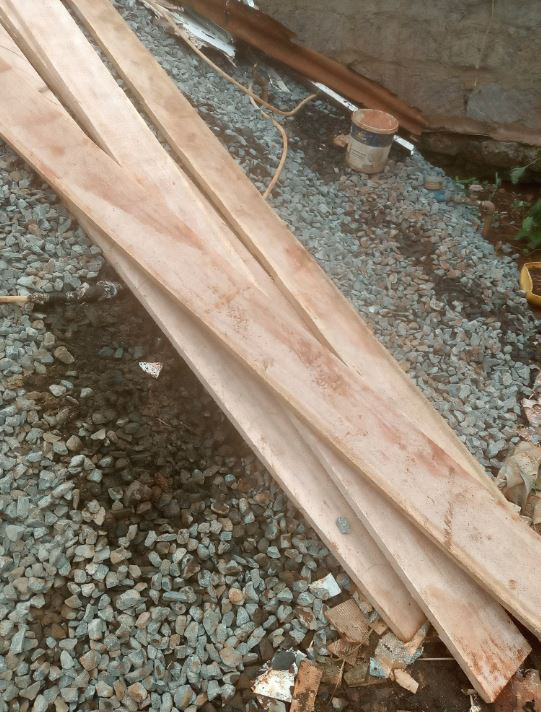
Many homeowners budget for stones, sand and cement but overlook additional expenses that can substantially increase the final cost. One of the biggest is excavating the foundation trench. Fundis commonly charge per linear foot, with deeper trenches, rocky ground and difficult soil attracting higher rates.
Timber and nails for formwork are another frequently missed expense. They are required when casting reinforced concrete columns, beams and coping, and the timber may not be fully reusable.
Other commonly overlooked costs include:
Clearing trees, shrubs and existing kei apple fences
Transporting materials and paying offloading charges
Water for mixing concrete, mortar and curing
Additional labour for sloping or difficult terrain
Stone cutting, breakages and material wastage
Reinforcement steel, binding wire and spacers
Gate fabrication, installation and electrical work
Plastering, painting, coping and security features
Site supervision, approvals and professional fees
Price increases or additional materials during construction
Include a 5–15% contingency allowance in your budget to cover unexpected site conditions and material shortages.
Frequently Asked Questions About Perimeter Wall Construction in Kenya
How much does a perimeter wall for a 50×100 plot cost in Kenya?
A standard stone perimeter wall for a 50×100-foot plot may cost approximately KSh 180,000–KSh 400,000+. A reinforced wall with concrete columns, ring beams, plastering and premium finishes may cost KSh 600,000–KSh 1.1 million or more. The final price depends on wall height, design, materials, labour, location and soil conditions.
How many stones are needed for a 50×100 perimeter wall?
A preliminary estimate for a wall with a three-course foundation and a walling section 10 courses high is Foundation stones Approximately 900, Machine-cut walling stones Approximately 2,100–2,300. The exact quantity depends on stone dimensions, wall height, gate width, column spacing, breakages and the mason’s laying method.
How do you calculate the perimeter of a 50×100 plot?
Use the formula: Perimeter = (length + width) × 2
Therefore (100 feet + 50 feet) × 2 = 300 feet. A 50×100 plot has a total perimeter of 300 feet, equivalent to approximately 91.4 metres.
What materials are required to construct a perimeter wall?
Typical materials include:
Foundation and machine-cut stones
Cement, sand and ballast
Reinforcement steel and binding wire
Timber and nails for formwork
Water for mixing and curing
Gate materials
Coping and finishing materials
The quantities required will depend on the wall’s structural design and site conditions.
Must vegetation be cleared before construction?
Yes. Existing trees, shrubs and live fences such as kei apple should be cleared from the proposed wall line. This provides enough working space, allows the trench to be dug straight and helps prevent poor alignment, delays and additional labour costs.
How deep should a perimeter-wall foundation be?
There is no single foundation depth suitable for every site. The correct depth depends on soil strength, wall height, slope, drainage and structural design. Although three courses of foundation stones may be used in suitable ordinary soil, weak, filled, waterlogged or expansive ground may require a deeper or reinforced foundation. Consult a qualified professional before construction.
What is the standard height of a perimeter wall in Kenya?
Most residential perimeter walls are approximately 6–8 feet high. The appropriate height depends on privacy, security needs, local planning requirements, structural stability and available budget.
How much does perimeter-wall labour cost?
Labour charges vary by location, wall design and site accessibility. Contractors may charge separately for excavation, masonry, concrete work, plastering, painting and gate installation. Request an itemised quotation showing whether the labour rate is calculated per foot, metre, day or completed project.
What hidden costs should be included in the budget?
Trench excavation and site levelling
Clearing vegetation and removing waste
Material transport and offloading
Water supply and storage
Timber and nails for formwork
Stone breakages and material wastage
Gate fabrication and installation
Plastering,and painting
Security features and electrical work
Professional fees and statutory approvals


Comments