
Carpri Dorper Sheep farm kenya

Updated: Mar 13

Image of James having some time with a T4 ram weighing over 125 Kgs
Remember lamb size at birth and colostrum quality and quantity are dependent of feeding during the last 6 weeks of pregnancy -Carpri Dorper Sheep Farm

Carpri Dorper Sheep Farm Ltd is a notable example of successful agribusiness in Kenya, founded by James and Beth Kahiga. Their journey from high-profile careers in the United States to establishing a thriving sheep farm Located in Kasuku in Nyandarua County reflects a blend of strategic planning, dedication, and innovation.

A T5 Ram lamb born on July 18th and weighed 5kgs at birth. On 18th August one month old later it weighs 14.5kgs.
Meaning in 30 days he added 9.5kgs or 316 grams per day. This was achieved by doing the following.
Started with good genetics a T5 RAM and T5 EWE
Fed the mother well during her pregnancy especially during her last month of pregnancy hence ensuring good birth weight as well as a lot of milk for the lamb
Creep feeding the young ram from 10 days .

The decision to transition from finance to agriculture was driven by a passion for sustainable farming and a commitment to contributing to their home community.
I went to one of the farms that sells pure Dorpers. The basis of the business is selling the meat if you buy pure breeds. But genetics must go hand in hand with proper feeding. High protein silage combined with genetics can get you an 80kg animal in six months. Dead weight 40kg x 600 =24,000. Gross. The ewe is meant to give birth twice a year. It didn’t sound easy and has many moving parts.- Muciri Kiambo

Founded by James Kahiga, a former Wall Street financial auditor, and his wife Beth Ann, the farm epitomizes a successful transition from corporate life to sustainable agriculture. After 14 years in the fast-paced financial sector of San Francisco, James Kahiga sought a more fulfilling and serene lifestyle.

Image of Dorper sheep by Carpri Dorper Sheep Farm Ltd
In 2008, James and Beth Ann, who managed a non-profit organization, recognized the toll their high-pressure careers were taking on their well-being. This realization prompted them to explore opportunities in Kenya, leading to the establishment of Carpri Dorper Sheep Farm.

Capri Dorper Farm has Pure South African Dorper Rams, Ewes and Cross South African and Kenya Dorper Rams, Ewes that are weaner lambs.

Images of ewes being fed well during the last six weeks of pregnancy Carpri Dorper Sheep Farm Ltd
The decision to focus on Dorper sheep was influenced by James's early experiences and the breed's notable characteristics. Developed in South Africa during the 1940s and 1950s, Dorper sheep are renowned for their exceptional meat quality, rapid growth, disease resistance, and low-fat content. These attributes make them highly suitable for the Kenyan climate and market demands.

T1 to T5 ratings are done in South Africa. This rating is accomplished by qualified judges examining the animal and determining how well they adhere to standards adopted by South Africa, for example muscle, fat mass and coloring. T1 being the lowest, T5 being the highest rating. Animals that are judged T1 to T5 are all Pure South African Dorpers.

Image of Dorper Sheep by Carpri Dorper Sheep
Carpri Dorper Sheep Farm LTD appears to focus on the breeding and management of Dorper sheep, a breed known for its adaptability and meat quality. The farm's Facebook page serves as a platform to share insights into their operations, educational content, and updates relevant to sheep farming enthusiasts and professionals.

Image of a Dorper sheep and Kid by Carpri Dorper Sheep Farm Ltd
Sheep born in Kenya are not able to be judged by South African (SA) standards.
Starting in 2019 with limited farming experience, the Kahigas immersed themselves in learning about sheep farming. They visited large-scale farms, consulted with experts, and even pursued courses related to animal husbandry. This proactive approach enabled them to build Carpri Dorper Farm from the ground up, incorporating best practices in farm management.
Colostrum is a key to healthy lamb and is produced in the last 6 weeks of pregnancy it is a life support system for newborns, lambs providing energy 10-13% and 2-3% lactose and passive immunity through antibody absorption it is essential for vitamin and trace elements

The farm operates on a zero-grazing model, with sheep housed in well-designed pens that minimize disease spread and stress. Each pen provides adequate space for feeding, resting, and movement, adhering to recommendations from agricultural studies.
Carpi Farm Competitive Advantage
Educational Posts
The farm shares informative content about sheep diseases, such as White Muscle Disease, detailing symptoms and prevention strategies.

Infrastructure Insights
They provide specifications for farm equipment, like feeding trough dimensions, which can feed up to 12 sheep.
Industry Recognition
The page acknowledges notable figures in sheep breeding, such as Mickey Phillips, highlighting his contributions to Dorper sheep breeding.

Carpi Dorper Sheep Farm Contacts
James | 0700243027 |
Capri Dorper offers farm visits by appointment only for 2000Ksh per person
Pure South African Ram | 110,000Ksh |
Pure South African Ewe | 60,000Ksh |
Cross South African Ram | 70,000Ksh |
Cross South African Ewe | 60,000Ksh |
Capri Dorper operates on a first come, first served basis, and they strive to their buyers taking home their purchases whenever feasible.

Image of Pregnant ewes
Carpri have Cross and Pure South African weaner rams for sale The pricing structure for Carpri Dorper is as follows pure South African Ram cost 110,000Ksh while Cross South African Ram cost 70,000Ksh .Due to high demand, Capri Dorper now offers the option to book lambs in advance with half or full payment.
We feed sunflower meal to our pregnant ewes at the rate of 200 grams plus 1 to 2kg of silage per day per ewe depending on size.

To ensure high-quality breeding stock, James imported top-grade Dorper sheep from reputable South African breeders, including Mickey Phillips and Albie Horn. These imports were meticulously planned, with all necessary customs and veterinary clearances obtained to maintain animal health standards. By crossbreeding these purebred animals with local sheep, the farm aims to enhance genetic diversity and improve the overall quality of their flock

In goat farming, the terms T4 and T5 often refer to treatment groups or experimental setups in research or extension programs, especially when testing different feeding regimes, breeding methods, or management practices.
However, T4 and T5 are not standard goat farming terms like "does," "bucks," or "kids." Instead, they are typically used in scientific studies to distinguish between different test groups.

Imagine a study testing different diets for goats:
T1 – Control group (standard feed)
T2 – Standard feed + 10% legume supplement
T3 – Standard feed + 20% legume supplement
T4 – Standard feed + 30% legume supplement

Image of a T4 ram by Carpri by Dorper Sheep
T5 – Standard feed + 40% legume supplement
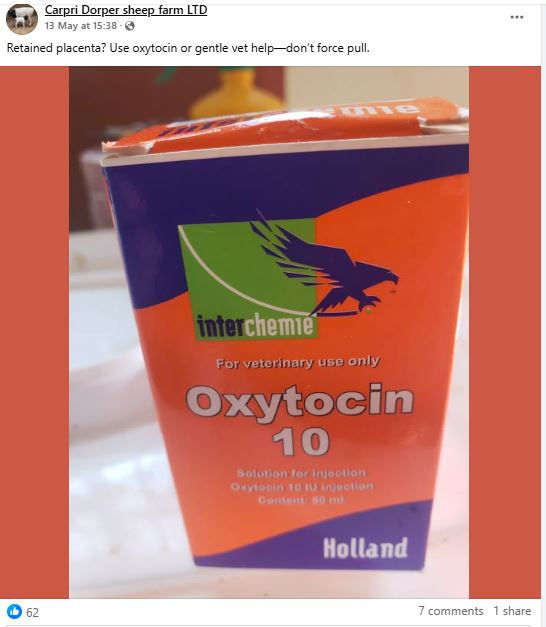
Image post by Carpri Dorper Sheep Farm sensitizing fellow farmers about retained placenta
Late gestation in sheep refers to the last 6 weeks of pregnancy. Since the total gestation period in sheep is about 147 days (roughly 5 months), late gestation starts around day 100.70% of fetal growth occurs during this period Inadequate nutrition can lead to pregnancy toxemia, low birth weights, and weak lambs

The Dorper sheep is widely considered the most profitable sheep breed in Kenya due to its excellent meat production, fast growth rate, and hardiness. Developed in South Africa, it adapts well to Kenya’s arid and semi-arid climates, requiring less intensive care than other breeds. Dorper sheep mature quickly, reaching market weight in a few months, and can breed up to three times in two years
Rotational grazing and supplemental feeding improve productivity and support sustainable Dorper sheep farming.
You can keep 6 to 10 Dorper sheep per acre, depending on pasture quality, rainfall, and grazing management. Well-managed, nutrient-rich pastures support higher stocking rates. Overgrazing should be avoided to maintain soil health.
What age to slaughter Dorper lambs?
Dorper lambs are typically slaughtered at 4 to 6 months of age, when they reach 30 to 40 kilograms live weight. This age ensures tender, high-quality meat and optimal feed-to-weight conversion.
A mature Dorper can sell for Ksh 20,000–30,000, depending on quality and market conditions. Small-scale farmers with about 20 sheep can earn annual profits ranging from Ksh 400,000 to Ksh 750,000 after the first year . The breed's low maintenance needs and efficient feed conversion make it suitable for Kenya's arid regions, enhancing its profitability.
Dorper sheep are primarily bred for meat, not milk. While they do produce milk to nurse their lambs, their milk yield is low and unsuitable for commercial dairy use.

At Carpri Dorper Sheep Farm in Nyandarua County, Kenya, the pricing for Dorper sheep varies based on breed purity and gender a Pure South African Dorper Ram cost 100,000Ksh ,a pure South African Dorper Ewe cost 50,000Ksh a Crossbred Dorper Ram cost 50,000Ksh while a Crossbred Dorper Ewe cost 30,000Ksh


Comments