
Bhang in Kenya: Laws, Price, Trafficking Routes & What You Should Know (2026 Guide)


1.)What is Bhang
3.)Why Is Bhang Illegal in Kenya
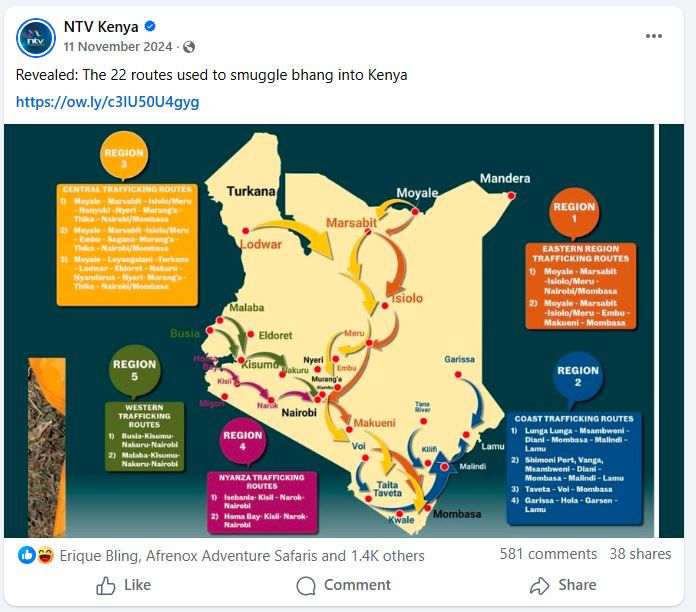
5.)Major Bhang Trafficking Routes in Kenya
6.)How Bhang Enters Kenya
7.)Effects of Bhang on the Body
9.)Global Perspective: Is Cannabis Legal Elsewhere
10.)FAQ: Bhang in Kenya
Cannabis is one of the Oldest Cultivated Plants it has been used by humans for over 5,000 years—for medicine, fiber, and rituals.

Modern cannabis strains are often much more potent than those used decades ago due to selective breeding.
Bhang is a traditional preparation made from parts of the Cannabis sativa plant, which has been used for centuries for cultural, medicinal, and recreational purposes. Historically, bhang originated in regions like India, where it was consumed as a drink (such as bhang lassi) during festivals and religious ceremonies. The cannabis plant contains active compounds like THC (tetrahydrocannabinol), which affect the brain and body.
Cannabis contains 100+ cannabinoids, including CBD, which doesn’t make you “high” but is widely studied for medical use.
Today, cannabis appears in many forms. Traditional bhang is usually consumed as a paste or drink, while modern forms include dried leaves or flowers that are smoked, oils and extracts used medicinally, and edibles such as capsules or infused foods. Medical cannabis is used in some countries under strict regulation to help manage pain, nausea, or certain neurological conditions.
Want To Learn About Himalayan Pink Salt Learn Here >>>
The hemp variety of Cannabis sativa was historically used to make ropes, textiles, and even early paper.
Hemp and Marijuana Are the Same Species. They come from the same plant species but are grown for different purposes—hemp for industry, marijuana for its chemical compounds.
Bhang (cannabis) is illegal in Kenya under the Narcotic Drugs and Psychotropic Substances Control Act. This law strictly prohibits the possession, use, cultivation, sale, or trafficking of cannabis in any form. Individuals found with bhang can face serious consequences, including fines and imprisonment, depending on the quantity and intent. Trafficking or large-scale distribution carries even harsher penalties.
Only female cannabis plants produce the buds commonly associated with use—male plants are mostly used for breeding.
The government enforces these laws due to concerns about public health, addiction, and links to crime. Unlike some countries that have legalized or regulated cannabis for medical or recreational use, Kenya maintains a strict zero-tolerance policy.
Want To Learn More About The East African Sandal Wood Learn Here >>>
Why Is Bhang Illegal in Kenya

Bhang is illegal in Kenya due to concerns about addiction, mental health risks, and its association with crime. The government classifies it as a controlled substance to protect public health and safety.
Price of Bhang in Kenya
That strong smell isn’t just THC—it’s caused by terpenes, the same compounds found in fruits like mangoes and lemons.

Prices of bhang in Kenya vary by location and supply, but small street quantities are often sold in low-value units such as 50Ksh or 100Ksh rolls. These are typically broken down from larger quantities and repackaged into smaller portions. However, because bhang is illegal under Kenyan law, such trade operates informally and carries significant legal risks for those involved.
Cannabis can be consumed as oils, edibles, teas, or capsules—not only smoked.
Bhang trafficking in Kenya typically follows key transport and trade corridors that connect border points to major cities. Common routes include:
Northern Route: Moyale → Isiolo → Nairobi
Coastal Route: Mombasa → Nairobi (via major highways)
Western Route: Busia/Malaba → Kisumu → Nairobi
Southern Route: Tanzania border → Namanga → Nairobi
These routes are often used because they align with busy logistics networks, making it easier to conceal illegal goods within normal cargo movement. Trafficking networks take advantage of long-distance transport systems, cross-border trade, and high urban demand, especially in cities like Nairobi.
How Bhang Enters Kenya
Despite its long history, the legality and use of bhang vary widely by country, and in places like Kenya, it remains illegal.
Bhang typically enters Kenya through cross-border smuggling from neighboring countries, using major entry points such as Moyale, Busia, Malaba, and Namanga. Traffickers often conceal it within legitimate cargo like agricultural produce, fuel tankers, or vehicle compartments to avoid detection. In some cases, it is transported in small quantities by individuals to reduce risk. Once inside the country, it moves through established transport networks to urban centers, especially Nairobi, where demand is higher.
Effects of Bhang on the Body
Short-Term Effects
Relaxation or euphoria
Altered perception of time and senses
Increased appetite (“munchies”)
Red eyes
Dry mouth
Reduced coordination and reaction time
Negative Effects
Impaired memory and concentration
Anxiety or paranoia (in some users)
Dizziness or confusion
Increased heart rate
Long-Term Effects
Dependency or habit formation
Reduced motivation
Memory and learning difficulties
Mental health risks (especially in young users)
Why Bhang is Still Widespread Despite Laws
It’s a Billion-Dollar Global Industry . In countries where it’s legal, cannabis has become a massive regulated industry, generating billions in revenue annually.
Bhang remains widespread in Kenya due to a mix of demand, economics, and enforcement challenges. High youth demand and unemployment create a steady market, while trafficking networks take advantage of established transport routes. The informal economy allows small-scale distribution to persist at low cost. Additionally, limited enforcement capacity across vast borders and urban areas makes it difficult to fully control supply. Social factors, including peer influence and perceived affordability, also contribute to its continued presence despite strict laws.
Global Perspective: Is Cannabis Legal Elsewhere
Cannabis laws vary widely across the world. Some countries have fully legalized it, others allow it only for medical use, while many still prohibit it completely.
🌍 Fully Legal (Recreational + Medical)
Countries like Canada and Uruguay have legalized cannabis for both recreational and medical use under strict regulation.
💊 Medical Use Only
Many countries, including Germany and South Africa, allow cannabis for medical purposes, often requiring prescriptions and controlled distribution.
🚫 Fully Illegal
In countries like Kenya, cannabis remains illegal, with strict penalties for possession, use, or trafficking.
FAQ: Bhang in Kenya
What is bhang?
Bhang is a common name for cannabis, a plant that contains psychoactive compounds such as THC. In Kenya, it is often referred to as weed, marijuana, or bangi.
Is bhang legal in Kenya?
No, bhang is illegal in Kenya under the Narcotic Drugs and Psychotropic Substances Control Act. Possession, use, or trafficking can lead to fines, imprisonment, or both.
What are the penalties for possession of bhang in Kenya?
Penalties vary depending on the quantity and intent, but they can include heavy fines and jail terms. Trafficking or large-scale possession attracts more severe punishment.
Why is bhang illegal in Kenya?
The Kenyan government classifies bhang as a controlled substance due to concerns about addiction, mental health effects, and its link to crime and illegal trade.
How does bhang enter Kenya?
Bhang is often smuggled into Kenya through various border points and transported along major routes such as Moyale–Isiolo–Nairobi and coastal entry points like Mombasa.
Why is bhang still common in Kenya despite being illegal?
Demand, unemployment, and organized trafficking networks contribute to its continued presence. Enforcement challenges also play a role in its availability.
What are the effects of bhang on the body?
Bhang can cause relaxation, altered perception, and mood changes. However, it may also lead to memory problems, reduced concentration, and potential dependency with prolonged use.
Is bhang legal in other countries?
Yes, some countries have legalized or regulated cannabis for medical or recreational use. However, laws vary widely, and it remains illegal in Kenya.
What is the difference between bhang and weed?
There is no real difference—“bhang,” “weed,” and “marijuana” all refer to the same cannabis plant, though the terms may vary by region and culture.
Can bhang be used for medical purposes?
In some countries, cannabis is used for medical purposes under strict regulation. In Kenya, it is currently not legally approved for medical use.


Comments