
Vanilla Farming in Madagascar: Cost, Profit Per Acre, Prices, Growing Process & Export Guide

Updated: Dec 19, 2025

1.)About Vanilla Farming in Madagascar
2.)Where Vanilla Grown in Madagascar
3.)Climate & Conditions Required for Vanilla
9.)How to Export Vanilla From Madagascar
11.)FAQs on Vanilla Farming in Madagascar
Vanilla is the most labour-intensive spice in the world.

Image of a Knife scraping vanilla bean seeds on a wooden surfac by eascar vanilla pods
Vanilla farming in Madagascar is one of the most unique and labor-intensive agricultural systems in the world, deeply rooted in tradition and shaped by the island’s climate, forests and rural economy.
One vanilla flower survives for only 12 hours, Every single vanilla pod you see was hand-pollinated by a farmer.

Madagascar produces over 80% of the world’s bourbon vanilla, mainly concentrated in the SAVA region—Sambava, Antalaha, Vohemar and Andapa—where the warm temperatures, high humidity and fertile forest soils create ideal growing conditions. Vanilla is an orchid (Vanilla planifolia) that grows as a climbing vine and requires companion trees for shade and support. The crop takes 2–3 years to begin flowering, and every single flower must be hand-pollinated within a 12-hour window, a skill passed down through generations.
According to curing standards, a typical A-grade Bourbon vanilla pod weighs 3–5 grams, depending on moisture.

After pollination, pods take 8–9 months to mature, and farmers harvest only once per year, making vanilla extremely vulnerable to theft. Because of this, Malagasy farmers mark their green pods with unique carvings to prove ownership.
1kg = 280–320 pods

1 kg of green beans becomes only 200–300 grams of cured black vanilla.
Green vanilla beans are usually sold at around USD 17 per kg, while cured export vanilla can reach USD 200–250 per kg due to the complex curing process that lasts 3–6 months. Despite the low farm-gate prices, vanilla can earn rural households USD 2,000–2,300 annually, making it one of Madagascar’s most vital cash crops.
Fresh green vanilla loses up to 80% of its weight during curing.
Where Vanilla Grown in Madagascar

Image of Vanilla beans drying on racks by VanillaPura
Vanilla in Madagascar is primarily grown along the humid northeast coast, with the SAVA region—Sambava, Antalaha, Vohemar and Andapa—producing nearly 80% of the country’s total output. This area offers the perfect combination of warm temperatures, high rainfall, rich forest soils and dense natural shade required by the vanilla orchid. Smallholder farmers cultivate vanilla under agroforestry systems, intercropping it with trees like clove, banana, coffee and native forest species. Beyond SAVA, smaller production pockets exist in Analanjirofo, Atsimo-Atsinanana and DIANA, though yields are lower.
Climate & Conditions Required for Vanilla

Vanilla is a tropical orchid that thrives in warm, humid environments, making Madagascar’s northeast coast ideal for its cultivation. The crop requires temperatures between 21°C and 32°C, consistently high humidity (70–80%), and annual rainfall above 1,500 mm, evenly distributed throughout the year.

Vanilla grows best at low altitudes (0–600 meters) under 50–80% filtered shade, usually provided by companion trees like Gliricidia, Erythrina or clove. Well-drained, loose soils rich in organic matter and with a pH of 6–7 are essential. Because vanilla vines are delicate, stable shade, moisture retention and protection from strong winds are critical for healthy growth and optimal pod development.
How Many Years Does It Take to Grow Vanilla
A single cyclone can wipe out one-third of Madagascar’s vanilla crop. This is why global prices swing wildly from year to year.

Vanilla is a slow-maturing crop that requires patience before it becomes productive. After planting, the vine takes 2 to 3 years to reach flowering stage. Once flowers are pollinated, the pods need an additional 8–9 months to fully mature. Farmers harvest only once per year, meaning a new vanilla plantation takes nearly 3½ years before generating its first meaningful harvest. This long cycle contributes to vanilla’s high global value.
Vanilla’s aroma comes from over 200 chemical compounds. But the star compound is vanillin, which gives the signature smell.
How to Start a Vanilla Farm in Madagascar (Step by Step)
A good vanilla vine can produce for up to 12–14 years. With proper care, pruning and shade management.

Select a low-altitude, humid area similar to the SAVA region, with 1,500 mm+ rainfall, good drainage and rich black or loamy soils. Avoid clearing primary forest; use existing agroforestry or degraded land that can be restored.
2.)Choose the Right Location
Select a low-altitude, humid area similar to the SAVA region, with 1,500 mm+ rainfall, good drainage and rich black or loamy soils. Avoid clearing primary forest; use existing agroforestry or degraded land that can be restored.
3.)Plant Shade & Support Trees
Establish “tutor” trees and shade trees (e.g., Gliricidia, Erythrina, banana, clove). Aim for 40–60% shade during growth, later reduced to 20–30% to trigger flowering.
4.)Build Organic Matter
Spread a 20–30 cm layer of mulch (leaves, prunings, banana stems) around future planting spots to keep soils cool, moist and fertile. Replenish regularly.
Pollinators like bees cannot naturally pollinate vanilla in Madagascar. Only Mexico has the natural pollinator (Melipona bee).
5.)Source Healthy Planting Material
Take cuttings only from vigorous, disease-free vines (3–4 years old, not yet exhausted). Avoid thin, weak or already heavily fruited vines.
6.)Prepare the Cuttings
Make 20–30 cm “short cuttings” with 2–3 nodes. Remove lower leaves and disinfect cut ends (e.g., cinnamon, beeswax or mild disinfectant). Let them heal for 1–3 days in a cool, shaded place.
7.)Plant the Vanilla Vines
Plant cuttings at a 45° angle near each stake or tutor tree, burying the lower node in the growing medium and tying the vine gently to the support. Typical density is about 1,600–1,800 plants per hectare.
8.)Manage Shade, Water & Mulch
Maintain stable shade, keep mulch moist (but not waterlogged), and ensure good air flow to prevent fungal diseases. Add fresh organic matter several times a year.
9.)Train & Loop the Vines
As vines grow, guide them up the support, then loop them back down to keep most growth at human height (1.8–2.25 m). Proper looping improves nutrition and future flowering.
10.)Prepare for Pollination & Harvest
From year 2–3, vines begin flowering. Learn hand pollination techniques, limit the number of pods per vine, and plan secure fencing/marking to reduce theft before the annual harvest.
Vanilla farming requires 40–70% shade – too much sun kills the vine.
Cost of Vanilla Farming in Madagascar

The cost of establishing and maintaining a vanilla farm in Madagascar varies depending on whether the land is already productive or requires rehabilitation. According to the World Bank’s analysis of the SAVA region, transitioning an existing traditional plot to a sustainable vanilla system costs around USD 660 per hectare over two years, mainly for labor, plot restructuring, mulching and shade management. Annual maintenance for a producing vanilla farm requires USD 370–600 per hectare, depending on labour intensity. Establishing a new vanilla plantation on degraded, non-forest land is far more expensive, costing approximately USD 4,750 per hectare over four years due to heavy labour, shade establishment and compensation before the vines begin producing.
Vanilla Farming Profit in Madagascar
Profitability increases further when beans are properly matured and sold to reputable collectors, as higher-quality green vanilla fetches premium prices.

Vanilla farming is one of the most profitable rural activities in Madagascar, generating significantly higher income than most food crops. A well-managed vanilla plot can produce 300–600 kg of green beans per hectare, depending on vine health and maintenance. At typical farm-gate prices of USD 15–20 per kg, farmers earn USD 4,500–12,000 per hectare annually. Even small household plots often generate USD 2,000–2,300 per year, making vanilla a crucial income source in the SAVA region.
Vanilla processing in Madagascar is a meticulous, multi-stage curing method that transforms fresh green beans into the aromatic black Bourbon vanilla prized worldwide.


This lengthy curing process is what creates Madagascar’s world-famous vanilla quality.
After harvesting, the beans undergo “killing”, where they are briefly dipped in hot water to stop maturation. Next comes sweating, where beans are wrapped in blankets and sun-warmed daily to trigger enzymatic reactions that develop vanillin. They are then sun-dried and shade-dried over several weeks to reach the desired 30–35% moisture content. Finally, the beans are conditioned in wooden boxes for 1–3 months to deepen aroma, then sorted, graded and packed for export.
How to Export Vanilla From Madagascar
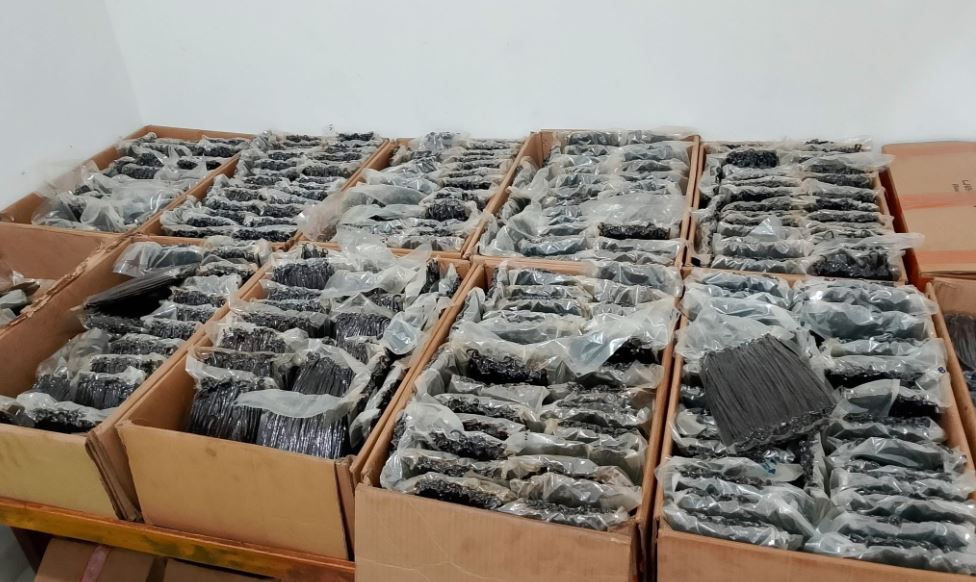
Image of Boxes filled with plastic-wrapped, Vanilla Bean pods by Ahmad Priyanto
Exporting vanilla from Madagascar requires strict compliance with national regulations and quality standards. Exporters must first obtain a trading license from the Ministry of Industry and register with the National Vanilla Council (CNV). Only fully cured vanilla—properly dried, graded and traceable—can be exported. Each batch must undergo quality inspection, moisture testing and certification to ensure it meets Bourbon vanilla standards. Exporters also need an export permit, phytosanitary certificate and customs clearance before shipment. Most vanilla is exported FOB through Antananarivo or Toamasina ports. Strict documentation, traceability and adherence to government rules ensure Madagascar protects its premium vanilla reputation.
Common Pests & Diseases Affecting Vanilla

Vanilla in Madagascar is highly sensitive to fungal diseases and moisture-related problems. The most serious are Fusarium wilt and Phytophthora rot, which cause yellowing, stem and root rot, vine collapse and rapid yield loss, especially in poorly drained, overcrowded, or poorly mulched plots. Anthracnose and other leaf spots also attack stressed vines. High humidity and stagnant air around the vines favour disease development. Key pests include slugs, snails, beetles, termites and root-feeding insects, which damage roots, young shoots and pods.
Why is Madagascar vanilla considered the best in the world?
Madagascar’s climate, rich soils and traditional curing techniques create exceptionally high vanillin content and a deep, aromatic flavor called “Bourbon vanilla,” unmatched by other origins.

How long does vanilla take to grow?
Vanilla vines take 2–3 years to start flowering. After hand-pollination, pods require 8–9 months to mature. Farmers harvest once per year.
How much do vanilla farmers earn in Madagascar?
Most farmers earn USD 2,000–2,300 per year from small household plots, while well-managed farms can earn USD 4,500–12,000 per hectare annually.
What makes vanilla farming so labor-intensive?
Each flower must be hand-pollinated within a 12-hour window, and curing involves multiple steps—killing, sweating, drying and conditioning—which take 3–6 months.

Image of Green vanilla pods and large leaves hanging from a vine by Common Sense Trading
Why do farmers mark their vanilla pods?
Because vanilla is harvested only once a year and highly valuable, thieves are common. Farmers carve unique symbols on pods to prove ownership.
What regions produce most vanilla in Madagascar?
The SAVA region—Sambava, Antalaha, Vohemar and Andapa—produces nearly 80% of Madagascar’s vanilla.
What are the biggest diseases affecting vanilla?
Fusarium wilt and Phytophthora rot are the most destructive, while pests include slugs, beetles and termites.
Warm temperatures (21–32°C), high humidity, 40–70% shade, 1,500 mm+ rainfall and loose, well-drained organic soils with pH 6–7.


Comments