
Precast Concrete Wall Prices in Kenya

Updated: Apr 12

Image of a Precast concrete wallby Kennedy Murithi Ireri
0.)About Precast Concrete
1.)Precast Concrete Wall Prices in Kenya
4.)Benefits of Precast Concrete Fencing
6.)How Long Do Precast Walls Last
About Precast Concrete
Did you know precast panels can be reused for decades? Unlike stone walls, precast walls are semi-permanent — you can uninstall them and move with them to a new property like furniture.

Precast concrete is a modern construction technology where concrete components are cast, cured, and finished in a controlled factory environment before being transported to the site for installation. This method ensures higher quality, uniformity, and strength compared to traditional on-site casting, which is affected by weather, labour skills, and site conditions. Precast elements include wall panels, beams, slabs, columns, fencing panels, and foundations, all engineered to meet specific structural requirements.
Did you know a single precast panel can weigh up to 140kg?Despite the weight, installation takes seconds because panels simply slide into the H-beams.
📍 Visit Beyond Forest Cyber Office Today (3 mins from Windsor)

Services:
📄 Bulk Printing, Photocopy & Scanning
🧾 KRA Returns, PIN & Tax Services
🚗 NTSA Services (DL, Smart DL, TIMS)
🏢 eCitizen Services (Certificates, Applications)
📑 CV Writing & Document Formatting
📊 Online Applications & Form Filling
📲 WhatsApp / Call: 0748102359 /0712582851
Looking for Affordable Precast Concrete Walls in Kenya?
Get quotations from trusted manufacturers, compare prices, and schedule delivery anywhere in Kenya.
👉 Fill the form below — Get Prices in 5 Minutes!
Fast • Trusted • Nationwide Delivery
One of the biggest advantages of precast concrete is its speed of construction. Because the panels and structural components are prepared in advance, installation on-site becomes fast and efficient, reducing the overall project timeline by more than half. Precast also eliminates the need for plaster, significantly lowering cement, sand, and labour costs.
The factory setting ensures precise dimensions, smooth finishes, and consistent quality—features that are difficult to achieve with manual casting.
H-beams can weigh over 240kg. They act as the “spine” of the wall and are engineered to hold several stacked panels securely for decades.

Precast concrete is also highly durable. It resists extreme weather, fire, pests, and moisture, making it ideal for both residential and commercial buildings. Its strength makes it suitable for multi-storey high-rise projects, while its clean finish is perfect for modern homes.
40×80 plot can be fully fenced in just 1–2 days. Traditional stone walling can take 2–4 weeks. Precast is up to 10× faster.

BBF in Kenyan construction stands for Biaxial Bubble Formwork (sometimes called Bubble Deck Slab or Hollow Void Slab).It’s a modern, lightweight slab technology that replaces part of the concrete with hollow voids—usually plastic balls or hollow blocks—reducing weight and saving materials.

Image of a Precast concrete wall and dry grass by Kennedy Murithi Ireri
Panel cost on average 2200Ksh-2600Ksh depending with the supplier
House Type | Number of Panels | Estimated Walling Cost |
Bedsitter | 25 panels | Ksh 56,025 |
One Bedroom | 60 panels | Ksh 134,460 |
Two Bedroom | 80 panels | Ksh 179,280 |
Three Bedroom | 120 panels | Ksh 268,920 |
Four Bedroom | 240 panels | Ksh 537,840 |
40×80 | 205 panels | Ksh 458,240 |
50×100 | 252 panels | Ksh 564,400 |
100×100 | 333 panels | 745,800 |
2-Bedroom Precast House Cost in Kenya
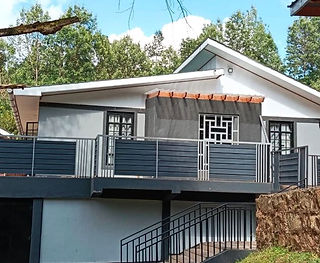


A modern 2-bedroom flat-roof house built using precast panels is becoming one of the cheapest and fastest ways to build in Kenya. The project below provides a realistic 2025 cost estimate that can guide you when planning your own build.
Looking for Affordable Precast Concrete Walls in Kenya?
Get quotations from trusted manufacturers, compare prices, and schedule delivery anywhere in Kenya.
👉 Fill the form below — Get Prices in 5 Minutes!
Fast • Trusted • Nationwide Delivery
Red Soil Areas
A 3-course foundation wall on red soil costs around:➡ Ksh 325,000
Black Cotton Soil
A site visit is required before costing because:
excavation depth varies
black cotton must be removed or stabilized
labour and backfilling differs per site
Precast Panels Walling Cost

The walling structure uses:
80 precast wall panels
40 steel channels
Factory Cost:➡ Ksh 211,280
Delivery and labor vary by location.
Flat Roof Steel Structure & Roofing Cost
A modern flat roof design using steel framing and box profile cover costs:➡ Ksh 254,850
This includes:
steel trusses/frame
box profile sheets
labour for installation
Total Structural Cost (Excluding Finishes)
Estimated Budget: Ksh 825,000
This covers:✔ foundation✔ precast panels✔ steel channels✔ steel roof structure✔ roofing materials
Finishing Costs

Finishing varies depending on your design and materials:
tiling
plumbing fixtures
gypsum ceiling
doors & windows
electricals
paint
cabinetry
precast panels don’t need plaster. This alone saves thousands on cement, sand, labour, water, curing time, and even theft of materials onsite.
Types of Precast Wall Panels & Their Costs
2.0 meter high panels | 1860Ksh |
2.5 meter high panels | 2075Ksh |
2.7 meter high panel | 2241Ksh |
3.0 meter high panel | 2490Ksh |

Image of a H Beam Precast Concrete weighing 240Kilograms
Precast wall panels come in several types depending on their design, thickness, and structural purpose. The most common are solid precast panels, used for perimeter walls and residential projects due to their strength and smooth finish. Hollow-core panels are lighter and ideal for faster installations or raised floors.
Looking for Affordable Precast Concrete Walls in Kenya?
Get quotations from trusted manufacturers, compare prices, and schedule delivery anywhere in Kenya.
👉 Fill the form below — Get Prices in 5 Minutes!
Fast • Trusted • Nationwide Delivery
Textured or patterned panels are used where aesthetics matter, offering decorative finishes without extra plaster. Costs vary by size and manufacturer, but in Kenya, standard solid precast panels typically cost between 2,200KSh and 3,000KSh per panel, excluding H-beams and delivery. Labor and installation depend on site conditions and height.
Precast vs Brick Wall: Which Is Cheaper?

Precast walling is generally cheaper than brick walling in Kenya, especially when you compare total project costs. Precast panels eliminate plastering, reduce labor hours, and minimize cement and sand consumption. A precast wall can be installed 40–60% faster, meaning fewer fundi on-site and lower overall expenses. On average, a standard precast panel costs 2,200KSh–3,000KSh, while a brick wall requires bricks, cement, sand, ballast, water, curing time, and skilled labor.
the holes in precast panels are intentional .They are engineered to reduce weight by up to 40%, save cement, prevent cracking, make transport easier and speed installation
Brick walling appears cheap at the material level but becomes expensive due to plaster, labor wastage, uneven workmanship, cracking, and long construction timelines. When all factors are included, precast walls can save 10–30% of total walling cost, making them the more economical option for most projects.
Benefits of Precast Concrete Fencing

The panels are factory-engineered for strength, ensuring long-lasting performance with minimal maintenance. Because the panels come with a smooth finish, there is no need for plaster, saving both time and money. Installation is fast and clean, requiring fewer fundi and significantly reducing labor costs. Precast fencing is resistant to fire, moisture, pests, and harsh weather, making it ideal for all environments. Its solid structure enhances security while giving properties a modern, uniform look.
Precast Wall Installation Process in Kenya
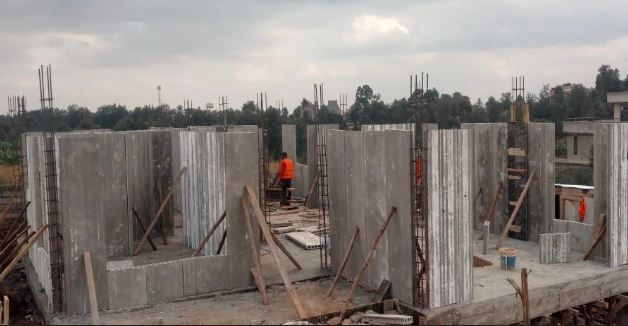
The installation of precast walls in Kenya follows a fast, efficient, and highly organized process. It begins with marking the boundary and excavating small holes where H-beams (support posts) will be placed. The beams are then aligned vertically using a plumb line and secured with concrete. Once the beams cure, precast panels are slid between them, stacking layer by layer to reach the desired height. The smooth factory finish eliminates plastering, reducing labor and materials. The entire process is clean, precise, and significantly faster than brickwork, allowing most plots—such as 40×80 or 50×100—to be fully fenced within 1–3 days.
How Long Do Precast Walls Last?
Precast concrete walls are engineered to last 40–70 years, depending on maintenance and environmental conditions. However, unlike stone or block walls, precast fencing is considered semi-permanent, meaning it can be easily uninstalled and relocated when needed. This makes precast fencing ideal for businesses, leased land, temporary sites, construction yards, car bazaars, hardware stores, and homeowners who may relocate in the future. The panels and H-beams can be removed without damaging them, allowing you to reinstall the same wall on another property saving you from rebuilding or losing your initial investment.
Common Precast Wall Sizes (40×80, 50×100, 100×100)

Precast walling is commonly used on standard Kenyan plot sizes such as 40×80, 50×100, and 100×100, allowing property owners to estimate fencing costs accurately. A 40×80 plot requires fewer panels and H-beams, making it the most affordable to fence, with typical walling costs of about 458,240KSh. A 50×100 plot has a larger perimeter, requiring more panels and averaging 564,400KSh. The 100×100 plot—ideal for homes, farms, or commercial use—needs the highest number of panels, with full walling costing around 745,800KSh. These standardized sizes make budgeting easier and ensure fast, efficient installation across different property types.
First, they require H-beams and proper alignment, meaning poor installation can affect stability.
Transporting panels to remote areas may increase costs, especially for long distances. Precast walls also require machinery or extra manpower to offload and install because of their weight.
Although they are semi-permanent and relocatable, the relocation process still requires a skilled team.
Finally, they offer limited customization compared to stone, especially for homeowners who prefer unique designs or curved wall layouts
Where to Buy Precast Wall Panels in Kenya

One of the most reliable places to buy precast wall panels in Kenya is through Kennedy Muriithi, a well-known expert in modern building technologies. Kennedy supplies high-quality precast panels in different heights, including 3.0m, 2.7m, 2.5m, and 2.0m, with prices ranging from 1,660KSh to 2,490KSh depending on the panel height. All panels are 2 feet wide, 90mm thick, and designed for both housing and fencing projects.
Kennedy offers countrywide delivery, professional installation services, and accurate site assessments—making him a trusted supplier for homeowners, developers, and contractors. His panels are suitable for both low-rise and high-rise projects, and many clients prefer him for his consistency, transparency, and reliable after-sales support.
For orders or inquiries, you can reach him directly via +254 112 479 368.

A standard precast wall for a 40×80, 50×100, or 100×100 plot costs between 458,240KSh and 745,800KSh , depending on panel size, height, and delivery. Individual panels range from 1,660KSh to 2,490KSh based on height.
Are precast walls cheaper than brick?
Yes. Precast walls are generally 10–30% cheaper because they eliminate plastering, reduce labor, minimize cement use, and install much faster than brick walls.
How long does a precast wall last?
Precast walls last 40–70 years with minimal maintenance. They are durable, weather-resistant, and ideal for both residential and high-rise projects.

Is precast the same as concrete?
Precast is concrete the difference is that it is manufactured in a controlled factory environment, ensuring higher quality, uniform strength, and less cracking.
Depending on height, precast panels cost 1,660KSh–2,490KSh, and each panel is usually 2 feet wide (0.6m). Cost per meter varies from 2,700KSh–4,000KSh including H-beams and installation.
How many panels do I need for my house?
Typical panel requirements Bedsitter 25 panels, 1 Bedroom 60 panels, 2 Bedroom 80 panels, 3 Bedroom 120 panels, 4 Bedroom 240 panels. These numbers help you budget accurately with no hidden costs.

Precast walls rarely crack because they are factory-engineered with controlled curing and reinforcement. Proper installation ensures long-term structural stability.
Are precast houses cheaper?
Yes. Precast houses are faster to build, require no plastering, reduce labor, and eliminate wastage making them significantly cheaper than stone or block houses.
Are precast panels strong enough for high-rise buildings?
Yes. Precast panels are reinforced and structurally engineered to be used in low-rise and high-rise construction. Many apartments in Kenya now use precast walling.
Hi, I’m Evans. Need Data Research or Analysis?
I help businesses gather the right data and turn it into actionable insights.
Can precast wall panels be reused?
Yes. Precast panels are semi-permanent. They can be uninstalled and relocated, making them ideal for businesses or individuals operating on leased land.
Precast H-beams (posts) typically cost between 1,500KSh–3,500KSh depending on height and reinforcement. They weigh about 240kg each.
What are the disadvantages of precast concrete?
Precast requires skilled installation, machinery for offloading, and may have transport costs for remote areas. Custom curved designs are harder to achieve.
Which is best precast or RCC?
For walling, precast is faster, cheaper, and more efficient. RCC (reinforced concrete cast on site) is stronger for beams, slabs, and columns but slower and more expensive for walls.
Is precast good for houses in Kenya?
Yes. Precast is ideal for modern homes—fast, cost-effective, durable, and compatible with flat roofs, modern designs, and high-rise structures.
Where can I buy precast panels in Kenya?
You can buy high-quality precast wall panels from Kennedy Muriithi, a trusted supplier offering panels from 1,660KSh–2,490KSh, with countrywide delivery and installation.
📞 Contact: +254 112 479 368


Comments