
FAQ about the Olea Africana|African Wild Olive

Updated: Jan 13

By the end of this secti0n you will have learnt
0.)About the Olea Africana
1.)Characteristics of the Olea Africana
2.)Olea Africana Common names
3.)Olea Africana Leaves
4.)Olea Africana Fruits
6.)Olea Africana Wood
7.)Other Species of Olea Africana
8.)Differences Between Wild Olive (Olea Africana) and Cultivated Olive (Olea Europea)
9.)Propagation of Olea Africana
10.)Olea Africana FAQ
Olea africana = wild olive tree → no oil production
Olea europaea = Mediterranean olive → oil + fruits

Image of Ripe Olea africana olive fruits
It produces one the heaviest woods known and is popular with the Maasai for making rungus (clubs). The poles are strong and used to support the heavy earth roofs of traditional Maasai houses. The African Olive charcoal is used for cleaning calabashes
Olea Africana, scientifically known as Olea europaea ssp. africana, is an indigenous African tree celebrated for its resilience, cultural value, and ecological importance. Unlike the Mediterranean olive grown for oil production, the African Wild Olive produces smaller, thinly fleshy fruits with minimal oil, but excels in hardiness and adaptability.
The Roots of the Olea Africana are very long and spreads so it is best when planted far away from the house or swimming pool
The tree naturally thrives in dry upland forests, rocky slopes, riverbanks, and mountain ravines across Kenya, Ethiopia, Tanzania, Uganda, Eritrea, Mozambique, Zimbabwe, and South Africa. It grows between 5–10 meters tall, occasionally reaching 18 meters, with grey to dark brown bark and narrow, drooping leaves that are dark green above and silver-scaled beneath.
Save Indigenous Tree Seeds Before They Are Lost Forever

Image of an African olive tree bark
The wood of the African Wild Olive is exceptionally hard and heavy, weighing around 1,140 kg per cubic meter
Communities across Africa value Olea africana for its extremely hard and heavy timber, weighing up to 1,140 kg per cubic meter. The wood is prized for carvings, ornaments, tools, and fine handmade furniture. Its leaves are browsed by livestock, and in Kenya, decoctions from its bark or roots are used as traditional remedies for malaria.

The oil-rich mesocarp found in Mediterranean olives is absent, so this subspecies is not suitable for olive oil production.
Olea Africana is a drought-tolerant species ideal for reforestation in semi-arid regions. Because of its slow growth and longevity, it is often planted for landscape restoration, boundary markers, and cultural significance. Olea Africana is a cornerstone species of Africa’s native forests and land economy.
Characteristics of Olea Africana

Image of african olive leaves
A mature Olea Africana can sequester about 22 kg of CO₂ annually, helping combat climate change.
Olea Africana is a hardy, evergreen tree characterized by its dense, rounded crown and exceptionally durable wood. It typically grows 5–10 meters tall, though some specimens reach 18 meters. The tree has grey to dark brown bark that becomes rough with age and narrow, drooping leaves that are dark green on top and silver-scaled beneath. Its fruits are small, oval, and dark brown to black when ripe.

Image of mutamaiyu tree trunk
Olea Africana Known for its drought and frost tolerance, Olea africana thrives in rocky slopes, riverbanks, dry forests, and high-altitude zones. Its slow growth, longevity, and strong root system make it ideal for reforestation and landscape restoration across Africa.

Image of Olea Africana Seedlings
The African Wild Olive is referred to as Muthata in Kamba language ,It is referred to as Yemit in Keiyo and Marakwet language .It is referred to as Mutamaiyu in Kikuyu Language ,It is referred to as Emitiot in Kipsigis Language . It is referred to as Kumunybuti in Bukusu language. It is reffered to as Kang'o in Luo language .It is referred to as Oloirien in Maasai Language .It is referred to as Muthata in Meru language and Emidit in Nandi Language
Olea Africana Leaves

The leaves of Olea africana are narrow, elongated, and distinctly leathery, giving the tree its hardy, evergreen appearance. They measure 2–10 cm long and droop slightly due to their slender petioles. The upper surface is dark green and glossy, while the underside is coated with fine silvery or golden scales that help reduce water loss in dry climates.
Want To Learn More About Miraa and Muguka Farming Click Here >>>>

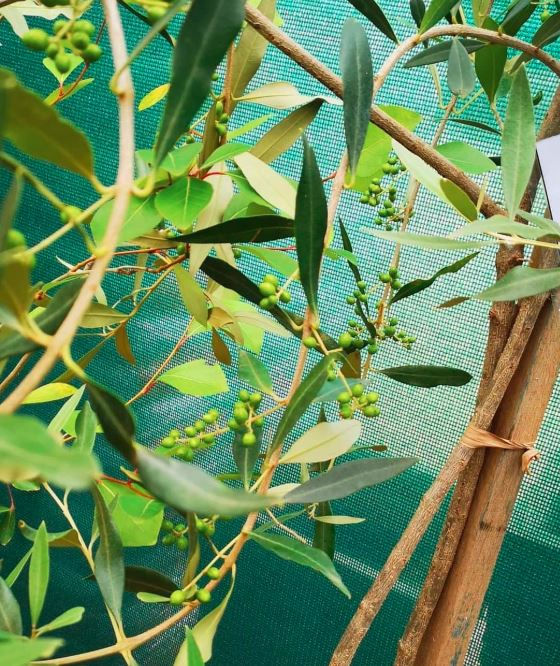
Image of Olea Africana fruits
The Olea Africana Fruits usually ripen toward the end of the rainy season and are an important food source for birds and wildlife.
The fruits of Olea africana are small, oval drupes that turn dark brown or black when fully mature. Typically measuring around 10 × 8 mm, they contain a thin layer of flesh surrounding a hard stone. Unlike the cultivated Mediterranean olive, these fruits have very low oil content and are not suitable for commercial olive oil production.
Want To Learn More About Cashew Nut Tree Click Here >>>
Olea Africana Flowers

The flowers of Olea africana are small, greenish-white to creamy in color, and pleasantly sweet-scented. They appear in loose axillary or occasionally terminal clusters measuring 5–6 cm long. Each flower is about 6–10 mm and contains delicate petals that attract insects for pollination. Flowering typically occurs before fruit development, marking the transition into the reproductive season.
Olea Africana Wood

Image of an African olive tree
The wood of Olea Africana is extremely hard and dense, with a fine grain, making it suitable for high-quality woodworking. The wood is highly valued for its durability and attractive grain, and hardness .
The Wild Olive tree wood is used in making Ideal for furniture, carvings, traditional items like walking sticks, handles, and even musical instruments.
Want To Learn More About East African Sandal Wood Tree Click Here>>>
Stabilizes soils, prevents erosion, and thrives in dry, rocky, and high-altitude ecosystems, making it ideal for landscape restoration.
Its fruits feed birds and wildlife, while its dense canopy offers habitat and shade.
1 Kilogram has roughly 13,800 seeds

Image of Wild african olive fruits
Used traditionally in ceremonies, boundary marking, and as a heritage tree in many African communities.
Produces exceptionally hard, durable wood ideal for carvings, ornaments, tools, and fine furniture.
Bark and roots used in traditional remedies, including malaria decoctions.
Leaves browsed by livestock; branches provide high-quality firewood.
Highly drought-tolerant and suitable for semi-arid reforestation programs.
Scientific Name | Common Name | Origin/Region |
Olea europaea ssp. africana | African Wild Olive | East & Southern Africa |
Olea europaea ssp. europaea | Mediterranean Olive | Mediterranean (Spain, Italy, Greece) |
Olea europaea var. sylvestris | Wild Mediterranean Olive | Mediterranean Basin |
Olea capensis | Ironwood / Black Ironwood | East, Central & Southern Africa |
Olea lancea (Olea chrysophylla) | Golden Olive / Lance-leaf Olive | Eastern Africa to Madagascar |
Olea hochstetteri | Hochstetter’s Olive | East African highlands |

Feature | Wild Olive (Olea africana) | Cultivated Olive (Olea europaea) |
Scientific Name | Olea europaea ssp. africana | Olea europaea ssp. europaea |
Origin | Indigenous to Africa | Native to the Mediterranean region |
Fruit Size | Very small (approx. 10 × 8 mm) | Large, fleshy olives suitable for processing |
Oil Content | Very low; not suitable for commercial oil | High oil content (olive oil production) |
Growth Habit | Often shrubby, small to medium tree (5–10 m) | Grows as a cultivated orchard tree (2–8 m) |
Wood Characteristics | Extremely hard, dense, valuable for carving | Less dense; not commonly used for timber |
Ecological Adaptation | Highly drought- and frost-tolerant; thrives in poor soils | Prefers Mediterranean climate; less hardy |
Uses | Timber, medicine, ornamental, reforestation | Olive oil, table olives, culinary uses |
Leaf Appearance | Narrow, drooping leaves; silver-scaled underside | Broader leaves; pale silver underside |
Wildlife Value | Fruits feed birds and wildlife | Mainly cultivated for human consumption |
Cultural Role | Important indigenous tree in African communities | Staple crop of Mediterranean agriculture |
Olea africana is primarily propagated from seed, although the process can be slow due to naturally hard seed coats and variable germination rates. Seeds should be cleaned, dried, and lightly scarified or soaked in warm water for 24–48 hours to improve germination.

Image of by Avalon Nursery & Landscaping
The species exhibits orthodox seed behavior, meaning seeds can be stored for several years at low moisture levels without losing viability. Sowing should be done in well-drained nursery media, with light irrigation to prevent rotting. Germination may take several weeks to months. Seedlings are drought-tolerant once established and require careful watering during the early stages to ensure strong root development.
Due to its slow growth and low germination rates, Olea africana propagation can be challenging. Scarification, stratification, and the use of rooting hormones are techniques that improve success rates,

Image of an Olea africana shoot
Although it’s typically challenging to propagate the Olea Africana due to its slow growth and hard seed coat some of the ways of propagating this Indigenous tree is through While carrying out Propagation from Seed Germination can take anywhere from 2 to 12 months.

Image of Olea African Tree seedlings
As the seeds have low and unpredictable germination rates. Keeping the soil moist (but not waterlogged) and in partial shade can improve results.

Image of Olea Africana Seedling
Propagation by Cuttings such as Semi-hardwood cuttings are most effective, as Olea africana has a dense wood structure. Choose 15-20 cm long cuttings from healthy, disease-free branches in late summer or early autumn. Rooting can take several months. Gently tugging on the cuttings after 8-12 weeks can indicate whether roots have formed
Olea Africana Frequent Asked Questions

What is Olea Africana?
Olea Africana, also known as the African Wild Olive, is an indigenous evergreen tree found across Eastern and Southern Africa. It is valued for its hard wood, drought tolerance, and ecological importance.
Is Olea Africana the same as the cultivated olive tree?
No. Olea Africana is the African subspecies of the olive family, while Olea europaea is the Mediterranean variety used to produce olive oil. They are related but have different fruits, uses, and adaptations.
Can Olea Africana produce edible olives or olive oil?
Its fruits are edible but very small and contain minimal oil. It is not suitable for commercial olive oil production.
Where does Olea Africana grow naturally?
It is indigenous to Kenya, Tanzania, Uganda, Ethiopia, Eritrea, Mozambique, Zimbabwe, and South Africa, thriving in dry forests, rocky slopes, riverbanks, and high-altitude areas.
How tall does Olea Africana grow?
Most trees reach 5–10 meters, but some can grow up to 18 meters in favorable conditions.

Image of Olea Africana by Induli Wholesale Nursery
How do you propagate Olea Africana?
Propagation is mainly through seeds. Scarify or soak seeds before planting, sow in well-drained media, and water lightly to prevent rot. Germination is slow but reliable with proper care.
What are the main uses of Olea Africana?
It is used for timber, carvings, traditional medicine, fuelwood, fodder, and reforestation. Its wood is extremely hard and highly valued for craftwork.
Is Olea Africana good for reforestation?
Yes. Its drought tolerance, longevity, and deep root system make it ideal for restoring degraded landscapes and stabilizing soils in semi-arid regions.

Save Indigenous Tree Seeds Before They Are Lost Forever


Comments