
Best National Parks in the USA for Camping (Costs, Rules & What to Pack)

Updated: Jan 12

1.)Best National Parks in the USA for Camping
3.)How Many National Parks Are There in the USA?
4.)Best National Parks in the USA for Camping (Top Picks)
5.)Camping Costs in U.S. National Parks (2026 Guide)
6.)Best Time of Year to Camp in U.S. National Parks
7.)Most Visited vs Least Crowded National Parks for Camping
8.)Frequently Asked Questions About Camping in U.S. National Parks
Yellowstone National Park was the first national park in the world, established in 1872, setting the global standard for conservation.

Vibrant hot spring with green and yellow hues at Yellowstone.
Image of The Grand Prismatic Spring in Yellowstone National Park — and yes, it looks unreal, but it’s 100% natural.
The United States is home to some of the world’s most diverse and scenic national parks, making it a top destination for camping enthusiasts. From alpine mountains and deep canyons to forests, deserts, and wetlands, U.S. national parks offer camping experiences for every skill level and budget.
Yellowstone sits on top of a supervolcano, one of the largest active volcanic systems on Earth.
Camping a U.S. National Park Soon?
📍 Get expert help on where to camp, what it costs, and what to pack.
Parks like Yellowstone and Yosemite are famous for breathtaking landscapes and abundant wildlife, while Great Smoky Mountains attracts campers with affordable fees and lush forests. Most parks provide well-maintained campgrounds, clear regulations, and access to hiking trails, scenic viewpoints, and outdoor activities, making national park camping both safe and rewarding for beginners and experienced campers alike.
Camping in U.S. National Parks
By following park rules and Leave No Trace principles, campers can enjoy safe, scenic, and unforgettable outdoor experiences year-round.
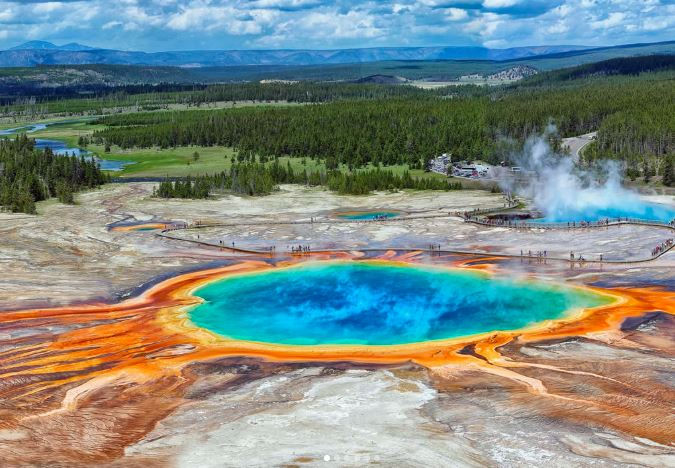
Vibrant geothermal pool with blue center, surrounded by orange and yellow rings at Yellow Stone National Park by Swanson's Travel
Planning a National Park Camping Trip? Let Us Help You Do It Right 🌲🏕️
Don’t guess your way through camping permits, costs, or packing lists.Get personalized national park camping advice, including:
Best parks based on your budget & travel dates
Camping cost estimates (tent, RV, backcountry)
What to pack based on season & location
Crowd-avoidance tips & hidden gems
👉 Fill the short form below and get a custom camping plan sent to you.
With over 60 national parks across the country, visitors can camp in diverse environments such as mountains, deserts, forests, and coastal areas. Most parks offer a range of options, including developed campgrounds, RV sites, and backcountry camping for adventurous travelers. Camping fees are generally affordable, and many parks require advance reservations, especially during peak seasons.
Yellow Stone National park contains over 10,000 geothermal features, including geysers, hot springs, fumaroles, and mud pots.
Nothing like a bison traffic jam at Yellowstone National Park! - AccuWeather

Image of a Bison at Yellow Stone National Park crossing a rural road with green trees and blue mountains in the background under a clear by Swanson's Travel
The United States currently has 63 officially designated national parks. These parks are managed by the National Park Service (NPS), which was established in 1916 to protect natural beauty, wildlife, and historical landmarks. National parks range from iconic destinations like Yellowstone and Yosemite to lesser-known gems in Alaska and remote island territories. While there are over 400 protected sites under the National Park Service, only 63 carry the formal “national park” designation, which represents the highest level of natural conservation and protection in the country.
YELLOWSTONE NATIONAL PARK spans three U.S. states: Wyoming, Montana, and Idaho.
This mentioned national park spans into the Rocky Mountains of Wyoming, Montana, and Idaho. The park was founded in 1872 and is therefore the oldest in the world! Spectacular natural phenomena and unique wildlife await here where bison, moose and bear roam freely. Beneath the surface rests an active volcano, forming a dramatic landscape with geysers and hot springs.
Isn't nature amazing? 🤩

Image of A waterfall cascades into a canyon surrounded by dense green forest at Yellow Stone National Park By Swanson's Travel
Yellowstone National Park | Best for Wildlife Camping |
Yosemite National Park | Best for Scenic Camping |
Grand Canyon National Park | Best Budget Camping |
Great Smoky Mountains National Park | Best for Beginners |
Zion National Park | Best Desert Camping Experience |
About half of the world’s geysers are found in Yellowstone National Park
Camping a U.S. National Park Soon?
📍 Get expert help on where to camp, what it costs, and what to pack.
Camping Costs in U.S. National Parks (2026 Guide)
Camping in U.S. national parks is generally affordable, but prices vary widely by park, campground type, season, and amenities. For tent camping, most developed park campgrounds charge between $15 and $35 per night, while RV sites with hookups typically cost $30 to $80 per night. Backcountry camping often requires a permit, which usually costs around $5–$20, depending on the park and the length of stay. Some parks have free or low-cost primitive sites, but these may lack water, toilets, or trash services.
Yellowstone is home to free-roaming wildlife, including bison, wolves, grizzly bears, and elk.
National Park Camping Rules You Must Know
Fees don’t always include park entrance fees, which are separate and range from around $20–$35 per vehicle at many parks, though some parks like Great Smoky Mountains do not charge entrance fees at all. Reservations are recommended for popular parks, especially in summer and peak holiday seasons, and can be made through Recreation.gov. Always check specific park websites for up-to-date pricing, seasonal closures, and special permits required for group camping, backcountry access, or RV over-length sites
What to Pack for Camping in National Parks (Essential Checklist)
Core items include a sturdy tent, sleeping bag rated for local temperatures, and a sleeping pad for insulation and comfort. Campers should carry weather-appropriate clothing, including warm layers and rain protection. Cooking supplies such as a portable stove, fuel, utensils, and food storage containers are vital, especially in wildlife areas. Other essentials include plenty of drinking water, a first-aid kit, headlamp or flashlight, navigation tools, personal hygiene items, and sunscreen or insect repellent for outdoor protection.
Packing correctly is essential for a safe and enjoyable camping experience in national parks, where weather and terrain can change quickly.
Best Time of Year to Camp in U.S. National Parks

Geyser erupts with steam in Yellowstone park, surrounded by forest and buildings in the background. Vibrant colors, natural setting.
The best time to camp in U.S. national parks depends on weather, crowds, and the type of experience you want. Late spring (April–June) and early fall (September–October) are ideal for most parks because temperatures are mild and campgrounds are less crowded. Summer is the most popular season, offering full access to high-elevation areas, but it also brings higher costs and heavy crowds. Winter camping is possible in select parks like Yellowstone and Yosemite, though it requires proper cold-weather gear and experience.
Bison in Yellowstone are the largest land mammals in North America.
Most Visited vs Least Crowded National Parks for Camping
Camping a U.S. National Park Soon?
📍 Get expert help on where to camp, what it costs, and what to pack.
Highly visited parks like Great Smoky Mountains National Park, Yosemite National Park, and Yellowstone National Park often require advance reservations and fill quickly during summer. In contrast, less crowded parks such as North Cascades National Park, Isle Royale National Park, and Great Basin National Park provide quieter camping, easier reservations, and a more secluded wilderness experience.
Frequently Asked Questions About Camping in U.S. National Parks
There is no single “best” park for everyone, but Yellowstone is widely considered the top national park for camping due to its wildlife, scenic landscapes, and numerous campgrounds. Yosemite is best for dramatic views, while Great Smoky Mountains is ideal for beginners and budget campers.
How many national parks in the USA allow camping?
Most of the 63 U.S. national parks allow some form of camping. Options range from developed campgrounds and RV sites to backcountry and wilderness camping, depending on the park’s size, ecosystem, and conservation rules.

Image pf Bison grazing near winding river in scenic landscape.
How much does it cost to camp in a U.S. national park?
Camping fees typically range from $15 to $35 per night for tent sites and $30 to $80 per night for RV sites with hookups. Backcountry permits may cost between $5 and $20, while some parks offer limited free camping.
Do I need a reservation to camp in national parks?
Yes, most national park campgrounds require advance reservations, especially during peak seasons. Reservations are usually made through Recreation.gov, and popular parks can book out months in advance.
Yellowstone has more than 1,000 miles of hiking trails, many leading into remote backcountry areas.
Can you camp anywhere inside a national park?
No, camping is only allowed in designated campgrounds or approved backcountry zones. Camping outside permitted areas is illegal and can result in fines, as it can damage ecosystems and wildlife habitats.
What are the main rules for camping in national parks?
Common rules include respecting quiet hours, storing food properly to avoid wildlife encounters, following fire regulations, staying within campsite boundaries, and practicing Leave No Trace principles to protect nature.
What should I pack for camping in U.S. national parks?
Essential items include a tent, sleeping bag, sleeping pad, weather-appropriate clothing, cooking equipment, food storage containers, first aid kit, and navigation tools. Packing depends on climate, season, and whether you are car camping or backpacking.
What is the best time of year to camp in national parks?
Late spring and early fall are generally the best times to camp due to mild weather and fewer crowds. Summer is popular but busy, while winter camping is limited to specific parks and requires special preparation.
Which national park has the cheapest camping?
Great Smoky Mountains National Park is one of the most affordable, with low campground fees and no entrance fee. Several western parks also offer inexpensive basic campgrounds without hookups.
Is camping in national parks safe?
Yes, camping in national parks is generally safe if visitors follow park rules, weather advisories, and wildlife safety guidelines. Most incidents occur due to improper food storage, weather exposure, or ignoring safety instructions.
What is the most beautiful national park to camp in?
Beauty is subjective, but Yosemite, Zion, Glacier, and Yellowstone are often ranked among the most beautiful national parks for camping due to their dramatic scenery and diverse landscapes.


Comments